
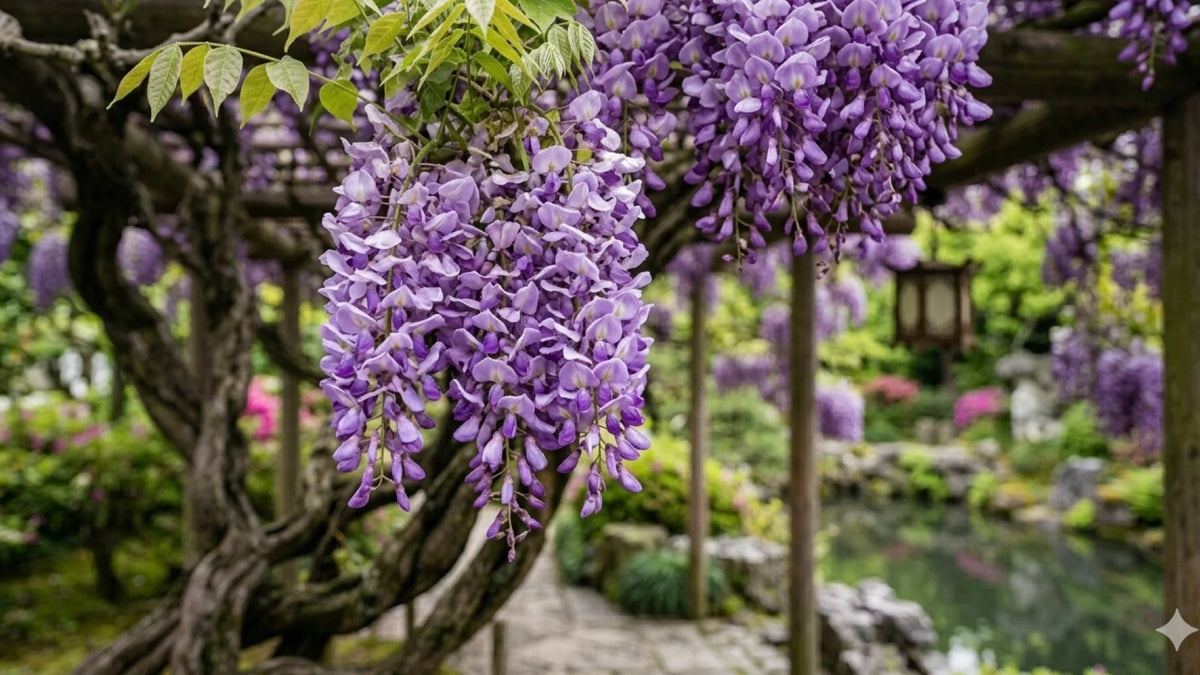
Wisteria is a flowering climbing vine that produces stunning, long clusters of blooms every spring. Growing wisteria is one of the most rewarding things a gardener can do, whether you are a complete beginner or someone who has been pottering around in the garden for years. It is not as complicated as it looks. With the right variety, a sunny spot, a sturdy structure, and a simple pruning routine, you can grow a wisteria that turns heads every single spring.
If you want to explore varieties and learn more about wisteria trees will help you plan the perfect garden display.
Why grow wisteria in your garden?

Few plants can transform a plain garden structure into something truly breathtaking quite like wisteria can. It covers pergolas, arches, and walls with dense, fragrant foliage and spectacular seasonal blooms. Beyond looks, it creates natural shade, attracts pollinators, and adds real long-term value to your outdoor space. Once planted well, wisteria is a gift that keeps giving season after season.
Types of wisteria you should know
Choosing the right type of wisteria makes a big difference in how well it suits your garden. Each species has its own personality, vigour, and flower style worth understanding before you buy.

Japanese wisteria (Wisteria floribunda)
Japanese wisteria is famous for producing the longest flower clusters of all the common varieties available. Its racemes can reach up to 90 cm, making it a truly dramatic choice for large structures. It blooms slightly later than Chinese wisteria, which helps it avoid late frost damage. This variety comes in purple, white, pink, and even double-flowered forms.
Chinese wisteria (Wisteria sinensis)
Chinese wisteria is one of the most vigorous and fast-growing varieties you can plant in your garden. It blooms before its leaves appear, which means the flowers are fully visible without any foliage in the way. The flowering display is shorter but intense, and the fragrance is absolutely incredible in spring. This is the variety most commonly seen covering walls and pergolas in older gardens.
American wisteria (Wisteria frutescens)
American wisteria is a much better choice for smaller gardens or gardeners who prefer less aggressive growth. It blooms later than Asian varieties and often produces a second flush of flowers in late summer. It is also considered less invasive, making it easier to manage and control throughout the growing season. Varieties like ‘Amethyst Falls’ are particularly popular for compact garden spaces.
Where to plant wisteria
Getting the location right from the start saves you a great deal of trouble and disappointment down the line. Wisteria is not a fussy plant, but it does have a few firm requirements that you must meet.
Sunlight requirements
Wisteria needs at least six hours of direct sunlight each day to flower reliably and well. A south- or west-facing wall or structure is ideal in most temperate climates around the world. Planting in too much shade is the single most common reason wisteria fails to bloom properly. The more sun it receives, the more flowers you will enjoy every spring season.
Soil conditions
Wisteria grows best in fertile, moist but well-drained soil that does not become waterlogged in winter. It tolerates slightly alkaline or neutral soil but struggles in very heavy clay without good drainage improvement. Adding compost to the planting hole gives your new vine the best possible start in life. Avoid over-feeding with nitrogen-rich fertiliser, as this encourages leaves instead of flowers.
Choosing the right support structure
Wisteria becomes very heavy with age, so it absolutely needs a strong, sturdy support structure to climb safely. Pergolas, brick walls with wire systems, robust arches, and solid trellises all work extremely well. Avoid attaching wisteria to lightweight or decorative structures that cannot bear significant long-term weight. Fix horizontal wires at 40–50 cm intervals on walls to give stems plenty of attachment points.
How to plant wisteria step by step
Best time to plant
The best time to plant wisteria is in spring or autumn when the soil is warm and moist enough. Container-grown plants can technically be planted at any time of year, avoiding extreme heat or frost. Spring planting gives the roots a full growing season to establish before their first winter arrives. Autumn planting works well too, as the plant can settle in before the busy spring growth period begins.
Planting from a container
Always buy a grafted plant rather than one grown from seed, as grafted plants flower much sooner. Soak the root ball thoroughly in water for at least 30 minutes before planting it out. Dig a hole twice as wide as the container and the same depth as the root ball. Backfill with a mix of compost and your existing soil, firm down gently, then water deeply and thoroughly.
Spacing and depth tips
Plant wisteria around 4-5 metres apart if you are growing multiple plants along a long structure. Ensure the graft union the knobbly join near the base sits just above the soil surface level. Planting too deeply can slow establishment and delay flowering by one or even two full seasons. Mulch around the base to retain moisture and keep roots cool during warmer summer months.
Watering and feeding your wisteria
Water newly planted wisteria regularly during its first growing season to help the roots establish firmly. Once established after two to three years, wisteria is surprisingly drought-tolerant and needs far less attention. Feed in early spring with a low-nitrogen, high-potassium fertiliser to encourage flowering rather than leafy growth. A tomato feed applied monthly from spring to midsummer works very well as a simple, affordable option.
Pruning wisteria tree - the key to more blooms

Pruning is the single most important thing you can do to keep your wisteria flowering beautifully every year. Without regular pruning, the plant becomes a tangled mass of stems with very few flowers to show for itself. You need to prune twice a year once in summer and once in late winter without exception. It sounds demanding, but each session takes less than an hour once you understand what you’re doing.
To get the most out of your plant every season, our detailed Purple Crepe Myrtle pruning guide will walk you through exactly when and how to prune for maximum blooms.
Summer pruning - July to August
Cut back all the long, whippy new shoots that have grown since spring to around five or six leaves from their base. This focuses the plant’s energy on developing flower buds rather than producing more and more new stems. Do this in July or August when the new growth has slightly firmed up and is easy to handle. It also keeps the plant tidy and stops it from smothering nearby plants or structures.
Winter pruning - January to February
Return to those same shoots you pruned in summer and cut them back again, this time to just two or three buds. These short, stubby spurs are exactly where next spring’s flower clusters will emerge and bloom beautifully. Pruning in winter is easier because the plant has no leaves, so you can see the structure clearly. This two-cut system is the secret behind every spectacular wisteria display you have ever admired.
If you love flowering climbers, you will find even more inspiration by browsing our full collection of flowering trees that bring colour and life to any garden.
Conclusion
Growing wisteria is one of the most rewarding decisions any gardener can make for their outdoor space. It asks very little from you beyond a good sunny spot, a sturdy support, and two pruning sessions each year. In return, it gives you decades of spectacular spring blooms, natural shade, and a garden that genuinely stops people in their tracks. Start with a grafted plant, train it with intention from day one, and trust the process your patience will be beautifully rewarded.
For more expert gardening guides, tips, and plant inspiration, visit Evergreentrees and start building the garden you have always dreamed of.
FAQs
How long does wisteria take to flower for the first time?
Grafted wisteria flowers in 2-3 years, while seed-grown plants may take up to 10 years or more to bloom.
Is wisteria safe to grow near a house?
Yes, if regularly pruned and kept away from roofs, gutters, and walls, as its strong stems can damage structures over time.
Can I grow wisteria in a pot?
Yes, use a large container with a compact variety and provide support. Pot-grown wisteria needs frequent watering and regular feeding.
Is wisteria poisonous to pets or children?
Yes, all parts are toxic if eaten, especially seeds and pods. Keep pets and children away and wash hands after handling the plant.
