
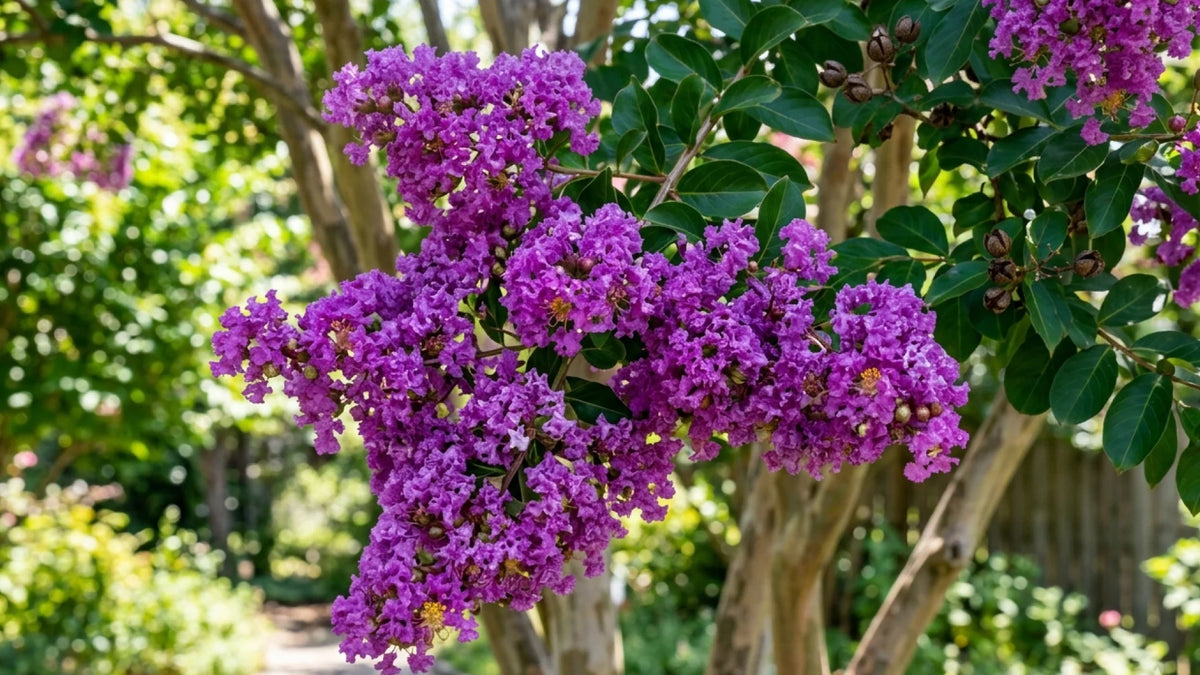
The Purple Crepe Myrtle is a stunning flowering tree that can transform any garden into a vibrant, eye-catching space. Known for its rich purple blooms and long flowering season, it adds beauty from summer through early fall. Growing this tree at home is easier than many people think, even starting from seed. With the right care, sunlight, and patience, a small seed can grow into a graceful showpiece. In this guide, you will learn simple steps to grow, care for, and enjoy a healthy Purple Crepe Myrtle in your own outdoor space.
Why Choose Purple Crepe Myrtle for Your Garden

Striking Visual Appeal
Purple crepe myrtle is a true eye-catcher, its rich purple flowers bloom in big, fluffy clusters that sway gently in the breeze. The smooth, peeling bark adds charm even when the tree is not in bloom. Simply put, it's a tree that looks beautiful all year round.
Long Blooming Season
Unlike many flowering trees, the purple crepe myrtle blooms for months. From early summer to early fall, your garden stays full of color. That's nearly 100 days of pure beauty with very little effort.
Low Maintenance Beauty
This tree is tough and forgiving, it handles heat, drought, and poor soil better than most. Once it's settled in, it needs very little care, making it perfect for busy gardeners.
Understanding Purple Crepe Myrtle Varieties
Popular Purple Cultivars

Not all purple crepe myrtles look the same, some popular types include Catawba with its deep violet flowers, Zuni known for its soft lavender shade, and Twilight which grows tall with dark purple blooms. Each one has its own charm, so pick the one that matches your taste.
Choosing the Right Size for Your Space
-
Dwarf crepe myrtles grow only 3 to 5 feet tall, perfect for small yards or pots
-
Medium varieties reach about 10 to 15 feet, ideal for home gardens
-
Standard trees can grow 20+ feet tall, best for open spaces and landscapes
-
Always consider your available space before selecting a variety
Starting Purple Crepe Myrtle from Seed

Collecting and Preparing Seeds
In late fall, look for small brown seed pods on mature trees. Pick them when they turn dry and slightly cracked. Open the pods carefully and take out the tiny seeds inside. Let them dry on a paper towel for a few days before storing or planting.
Germination Process Step-by-Step
Fill a small tray with light, well-draining soil, sprinkle the seeds on top and cover them lightly with soil. Mist with water, then cover the tray with plastic to keep it warm and moist. Place it in a sunny spo, in 2 to 3 weeks, you'll see tiny green sprouts popping up.
Transplanting Seedlings
Once your seedlings have 4 to 6 leaves, it's time to move them. Gently lift each one and plant it in a larger pot. Keep them indoors or in a sheltered spot until they grow stronger and the weather warms up.
Planting Your Purple Crepe Myrtle
Best Time to Plant
Spring and early fall are the best times to plant crepe myrtle, the soil is warm but not too hot, giving roots time to settle before extreme weather hits.
Selecting the Perfect Location
Crepe myrtles love the sun, choose a spot that gets at least 6 hours of direct sunlight each day. More sun means more flowers. Avoid shady corners, as these trees won't bloom well without light.
Soil Preparation and Planting Depth
Dig a hole twice as wide as the root ball but just as deep, mix some compost into the soil for extra nutrients. Place the tree in the hole, making sure the top of the root ball is level with the ground. Fill in with soil and water well.
Essential Care and Maintenance
Watering Schedule for Healthy Growth
Young trees need regular watering about twice a week during the first year. Once grown, crepe myrtles only need water during dry spells. Too much water can harm the roots, so let the soil dry slightly between waterings. Whether you're growing a standard tree or a purple myrtle plant, proper watering is key to strong growth and blooming.
Fertilizing for Vibrant Purple Blooms
Feed your tree in early spring with a balanced fertilizer. A second light feeding in early summer can boost blooming. Don't overdo it — too much fertilizer gives more leaves but fewer flowers.
Pruning Techniques (Avoiding "Crepe Murder")
Pruning helps shape the tree and encourage new blooms. But beware of "crepe murder" a common mistake where people chop the tree back too harshly. Instead, trim only dead branches and thin crowded areas in late winter. This keeps the tree healthy and natural-looking.
Common Problems and Solutions
Dealing with Powdery Mildew and Aphids
Sometimes, you might spot a white powder on leaves or tiny bugs called aphids. Don't worry — both are easy to treat. Spray the leaves with a mix of water and mild soap, or use neem oil. Good airflow around the tree also helps prevent mildew.
Troubleshooting Poor Blooming
If your tree isn't blooming well, check the sunlight first. Too much shade is the top reason. Other causes include over-fertilizing or harsh pruning. Fix these issues, and your tree will reward you with plenty of flowers next season.
Enjoying Your Showpiece Tree

Landscaping Ideas with Purple Crepe Myrtle
A single purple crepe myrtle can stand tall as the star of your yard. You can also plant a row of them along a driveway for a stunning purple tunnel. The twilight purple crape myrtle works especially well in landscapes where you want deeper, dramatic color contrast with lighter flowering plants.
Seasonal Care Throughout the Year
In spring, focus on fertilizing and pruning. Summer is all about watching those beautiful blooms. In fall, rake up fallen leaves to keep the area clean. Winter is quiet time just a light trim and the tree will rest until spring.
If you love colorful flowering trees, you may also enjoy our guide on Pink Crepe Myrtle growing and care tips for more seasonal garden inspiration.
Conclusion
Growing a Purple Crepe Myrtle from seed is a simple yet rewarding process that adds lasting beauty to any garden. With the right sunlight, soil, and basic care, a small seed can grow into a stunning flowering tree full of rich purple blooms. It requires little maintenance once established, making it perfect for both beginners and experienced gardeners. Whether used as a focal point or part of a landscape design, this tree brings color, elegance, and charm that lasts through many seasons.
Discover more premium plants and gardening guides at evergreentrees for your perfect green space.
FAQs
1. How long does Purple Crepe Myrtle take to grow from seed?
It usually takes 2 to 3 weeks to germinate and several years to grow into a fully blooming mature tree.
2. Does Purple Crepe Myrtle need full sunlight?
Yes, it needs at least 6 hours of direct sunlight daily to produce healthy growth and abundant purple blooms.
3. How often should I water Purple Crepe Myrtle?
Water young plants twice a week. Mature trees only need watering during long dry periods or extreme heat.
4. Can I grow Purple Crepe Myrtle in a pot?
Yes, dwarf varieties grow well in pots if they receive enough sunlight and are planted in well-draining soil.
5. Why is my Purple Crepe Myrtle not blooming?
Lack of sunlight, over-fertilizing, or heavy pruning are common reasons that prevent proper flowering in crepe myrtles