
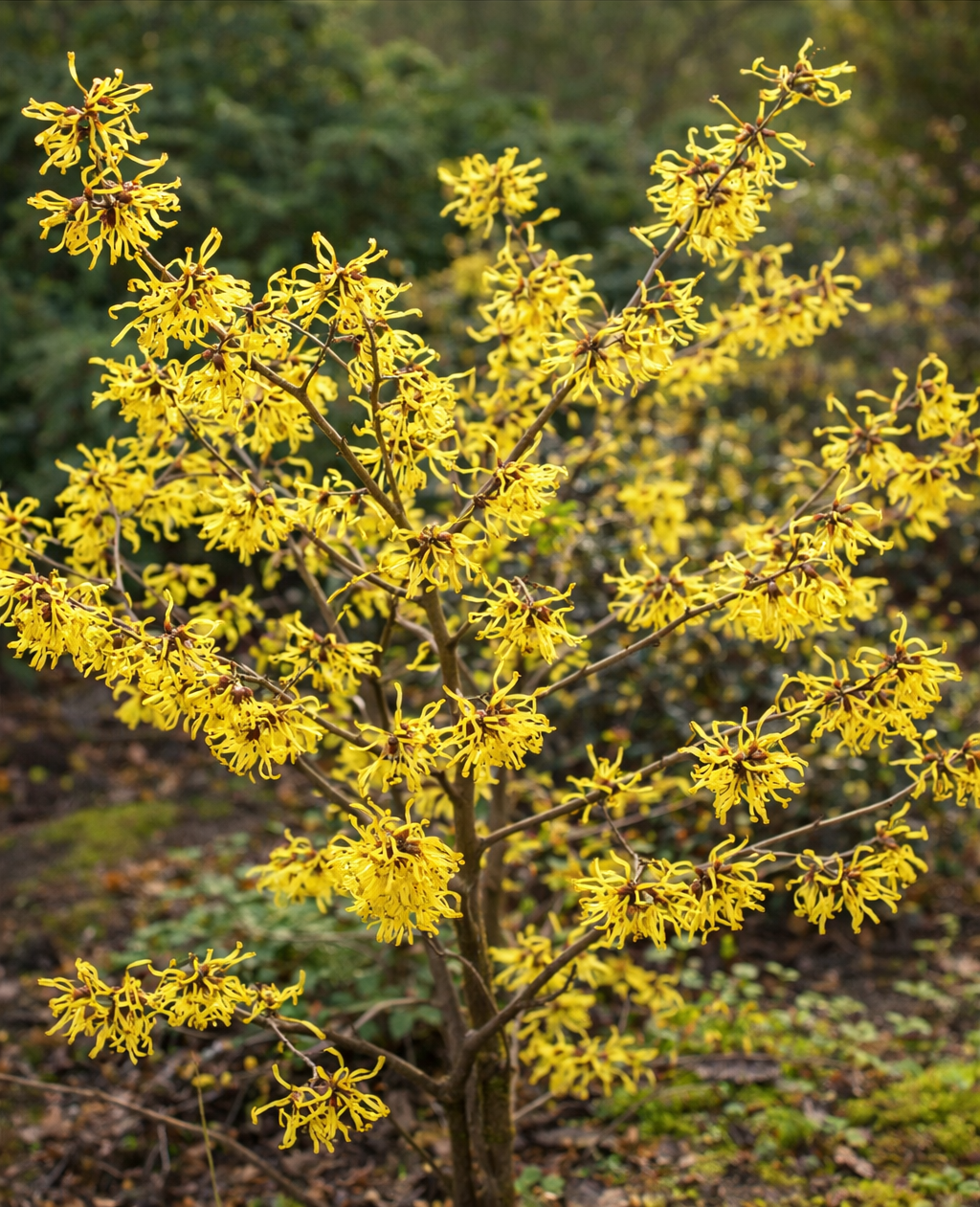
Witch hazel (Hamamelis virginiana) is important because it brings color and life to your garden when most plants are dormant. Its bright yellow, orange, and red flowers bloom from January to March, making your winter garden lively and cheerful. In the mornings, these winter-flowering plants fill the air with a sweet smell that goes perfectly with a Perennials.
This plant is easy to grow and needs little care, requiring regular watering only for the first two years. After that, it thrives naturally and blooms every winter, giving beauty and activity all year.
Enjoying Witch Hazel Blooms in Your Garden
You can enjoy witch hazel blooms from January to March with bright yellow, orange, and red flowers. Blossoms grow in clusters along branches, creating a naturally cheerful display. On cold mornings, they release a gentle honey and citrus fragrance throughout your garden.
Different varieties may bloom earlier or later, giving extended winter color. These flowers attract early pollinators, supporting your garden’s ecosystem. With proper care, witch hazel provides reliable blooms and a lively, colorful garden even in the coldest months.

How to Plant Your Witch Hazel
When you buy witch hazel (Hamamelis virginiana), follow these steps to ensure it grows successfully:
- Dig a Hole: Make it twice as wide as the root ball but equal in depth.
- Position the Plant: Set the top of the root ball level with the ground.
- Backfill and Water: Fill the hole with amended soil and water thoroughly to settle the roots.
- Mulch Application: Apply mulch around the base, keeping it 2–3 inches away from the trunk.
- Spacing: Plant at least 10–15 feet away from other trees and shrubs.
Following these steps helps your witch hazel establish well and add beauty and structure to your garden for years.

Watering and Fertilizing Tips
Water your witch hazel regularly during the first two years so the roots grow strong. Keep the soil moist but not too wet. In spring, add compost or a light fertilizer to support healthy growth. Avoid over-fertilizing, as witch hazel grows best naturally.
Pruning and Maintenance
Witch hazel needs very little pruning. Remove only dry, broken, or weak branches. The best time to prune is late winter or early spring. Avoid heavy pruning, as it can reduce flowering. Always use clean tools to keep the plant healthy.
Health and Medicinal Benefits
Witch hazel is known for its gentle healing benefits. It is commonly used in skincare to calm skin, reduce redness, and soothe minor irritations. Many people also use it in natural remedies, making witch hazel a trusted plant for simple and natural skin care.
How to Design Your Garden with Witch Hazel
Use witch hazel as a focal plant because it blooms in winter when most plants are bare. Pair it with evergreen shrubs to add year-round structure and color. Plant it near walkways or garden edges so you can enjoy its flowers and light fragrance during colder months.
When and How to Harvest and Use Witch Hazel
You can harvest witch hazel bark or twigs in late fall or early spring. These parts are often used to make natural extracts at home. Witch hazel extracts are commonly used for gentle skin care, minor irritation relief, and simple home remedies.
Winter Care and Protection for Witch Hazel
Protect your witch hazel in winter by covering young plants with mulch to keep roots warm. Avoid heavy pruning before frost. In extremely cold areas, use temporary garden fabric or burlap around the plant.
Ensure the soil drains well so water does not freeze around the roots. These steps help your witch hazel survive winter and bloom beautifully next season.
Best Companion Plants to Grow Alongside Witch Hazel
Witch hazel blooms in late autumn and winter, so choose companion plants that flower in similar seasons. These shade-loving plants grow well together and create a beautiful winter garden display.
Top Companion Plants:
- White Baneberry: Produces white berries in winter, matching witch hazel’s season.
- Blue Cohosh: A shade plant that grows beautifully next to witch hazel.
- Trillium Plant: Prefers shade and creates a woodland garden look.
All three plants thrive in shade and bloom during similar seasons. Together, they create a stunning winter garden. Explore more companion plants in our perennials collection to design your perfect winter garden.
Conclusion
Witch hazel brings life and color to your garden even in the coldest months. With the right sunlight, soil, and spacing, you can enjoy healthy plants that bloom beautifully every winter. Pair it with companion plants and evergreens to create a lively, structured garden.
Its gentle flowers, fragrance, and natural extracts add both beauty and wellness benefits. By planting and caring for witch hazel, you create a peaceful, nature-filled space to enjoy all year long. Explore Ever-Green Trees for more gardening solutions to keep your landscape vibrant in every season.
FAQs
1. When does Witch Hazel bloom?
Witch hazel blooms in late autumn and winter, typically from January to March depending on the variety.
2. How often should I water Witch Hazel?
Water regularly for the first two years, keeping soil moist but not waterlogged. After that, minimal watering is needed.
3. Can Witch Hazel grow in partial shade?
Yes, it prefers full sun but can tolerate partial shade and still bloom successfully.
4. How do I protect Witch Hazel in winter?
Use mulch around roots, avoid heavy pruning, and cover with fabric or burlap in extreme cold.
5. What are Witch Hazel’s uses?
Its bark and leaves are used to make natural extracts for skincare, minor irritation relief, and simple home remedies.
