
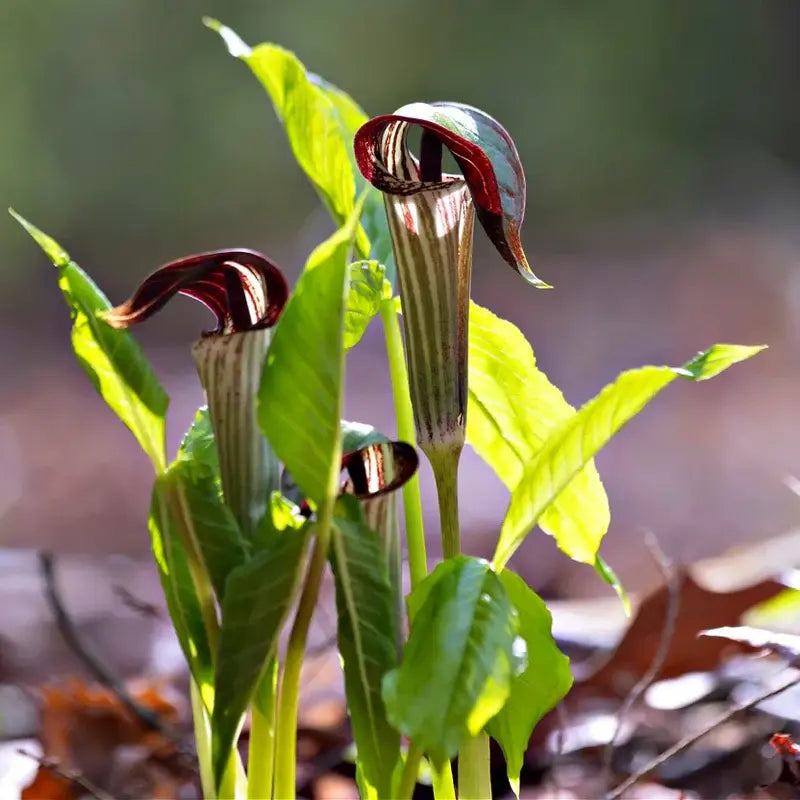
You grow Jack-in-the-Pulpit when you want to add something unique and eye-catching to your shade garden. You see, it’s an unusual hooded flower that gives your space a natural woodland feel. This plant grows well in moist, shady areas, so you can easily fill those tricky spots in your garden. You also get lush green foliage that adds texture and depth. When you explore more shade-loving plants on Evergreen Trees, you find great ideas for building a balanced, attractive garden. With simple care, you turn quiet corners into something special.
What Is Jack-in-the-Pulpit?
Jack-in-the-Pulpit is a unique woodland plant known for its unusual flower that looks like a hood covering a central spike. You see it growing naturally in shady, moist areas where it blends beautifully with forest plants. It adds a wild, natural touch to your garden with very little effort.

Key Facts and Identification
You can easily recognize Jack-in-the-Pulpit once you know what to look for. This unique perennial plant is known for its distinctive woodland features. Here are the key facts to help you identify it:
- Botanical Name: Arisaema triphyllum
- Common Name: Jack-in-the-Pulpit
- Plant Type: Perennial woodland plant
- Height: Usually grows 1 to 2 feet tall
- Leaves: Three-part leaves with a smooth green texture
- Flower: Hooded structure called a spathe covering a spike known as a spadix
- Bloom Time: Mid to late spring
- Light Needs: Prefers partial to full shade
- Soil Type: Moist, rich, well-drained soil
- Special Feature: Produces bright red berries in late summer
Is Jack-in-the-Pulpit Suitable for Your Garden Space?
Jack-in-the-Pulpit is a good choice for your garden if you have shady spots and moist soil that stays cool for most of the year. You grow it easily in woodland-style gardens, under trees, or in areas where sunlight is limited. It works well when you want a natural, low-maintenance plant that blends with other shade lovers. If you are planning a mixed garden setup, you can explore more shade-loving plants and garden ideas on the Evergreen Trees, which helps you understand what plants work best together and how to create a balanced garden space.
Where Does Jack-in-the-Pulpit Grow Naturally?
Jack-in-the-Pulpit naturally grows in shady woodland areas with moist, rich soil, often in forests, along streams, and damp valleys under tree cover. It is commonly found in eastern North America, where it blends with other wild plants. It prefers a cool to moderate climate with mild summers and cold winters. For best growth, it needs partial to full shade, consistently moist but well-drained soil, and organic matter like leaf litter to keep it healthy.
When Does Jack-in-the-Pulpit Bloom?
Jack-in-the-Pulpit shows its unique beauty during a specific time of the year, making it a special plant in woodland gardens.
- Blooming Season: Jack-in-the-Pulpit blooms in spring
- Typical Months: Usually from April to June
- Weather Conditions: Flowers appear when temperatures start warming up
- Soil Requirement During Bloom: Moist soil helps healthy flowering
- After blooming, it can produce bright red berries in late summer
- Garden Interest: Gives seasonal beauty from spring flowers to summer berries
This seasonal cycle makes it a standout plant that adds interest to your garden across different months.
How Long Do the Flowers and Berries Last?
Jack-in-the-Pulpit has a short bloom period, with its unique flowers lasting about 2 to 3 weeks in spring. After flowering, it produces bright red berries in late summer that can stay on the plant for several weeks into fall. This gives your garden both a brief floral display and longer seasonal interest through its berries.

How to Grow Jack-in-the-Pulpit Successfully
To grow Jack-in-the-Pulpit successfully in your garden, you need to follow a few simple care steps that match its natural woodland habitat.
- Choose the Right Spot: Plant it in partial to full shade where it stays protected from harsh sunlight
- Soil Type: Use rich, moist, and well-drained soil with plenty of organic matter
- Planting Time: Plant bulbs or roots in early spring or fall for best results
- Watering Needs: Keep the soil consistently moist, especially during dry periods
- Mulching: Add leaf mulch to retain moisture and mimic natural woodland conditions
- Temperature: Grows best in cool to moderate climates with seasonal changes
- Spacing: Give enough space so roots can spread naturally over time
- Care Tip: Avoid overwatering or letting the soil dry out completely
With the right care, you can easily grow a healthy and attractive Jack-in-the-Pulpit in your garden.
How to Care for Jack-in-the-Pulpit Plants
To care for Jack-in-the-Pulpit, you keep it in partial to full shade and maintain moist, well-drained soil. You add leaf mulch to help retain moisture and improve soil health. A light dose of organic compost once or twice a year supports growth. It prefers cool to moderate climates, and you allow it to go dormant naturally in winter without disturbance. With simple care, it stays healthy and returns stronger each season.
How to Propagate Jack-in-the-Pulpit
You can propagate Jack-in-the-Pulpit through seeds or corm division and plant it in early spring or fall for best results. For seeds, you collect red berries in late summer, clean them, and sow them in moist, shaded soil, but they take time to mature. For faster growth, you divide corms in the fall during dormancy and replant them in rich, well-drained soil with shade.
How to Prevent Root Rot and Fungal Issues
To keep Jack-in-the-Pulpit healthy, you need to prevent root rot and fungal issues with simple care steps.
- Use well-drained soil: You make sure the soil does not hold extra water and drains properly
- Avoid overwatering: You keep the soil moist but never soggy or waterlogged
- Choose a shaded spot: You grow the plant in partial to full shade to reduce stress and moisture buildup
- Improve air flow: You give enough space between plants so air can move freely
- Add light mulch: You use leaf mulch to keep moisture balanced, but avoid piling it on the stem
- Clean garden area: You remove dead leaves and plant debris regularly to stop fungus from spreading
- Use healthy planting material: You always plant disease-free corms or seeds
- Check regularly: You inspect roots and leaves often to catch early signs of rot or fungus
With these simple steps, you protect your plant and keep it strong and healthy for every season.
Who Should Grow Jack-in-the-Pulpit?
You should grow Jack-in-the-Pulpit if you have a shady garden space and want a unique, low-maintenance woodland plant. It is a great choice for you if your garden has moist, rich soil and you prefer plants that naturally blend with trees and other shade-loving plants. You will also enjoy it if you like seasonal interest, since it gives unusual flowers in spring and bright red berries later in the year. This plant suits you best if you want something natural, easy to care for, and perfect for filling empty shady corners in your garden.
Best Companion Plants for Natural Appeal
Here are some of the best companion plants for natural appeal that you can grow with Jack-in-the-Pulpit to create a balanced woodland garden:
- Ferns: You use ferns to add soft texture and a natural forest feel in shady areas
- Hostas: You plant hostas for their large leaves that fill empty spaces and improve coverage
- Trillium: You grow trillium for its simple woodland flowers that blend naturally with Jack-in-the-Pulpit
- Solomon’s Seal: You include Solomon’s Seal for its elegant arching stems and natural woodland look
- Wild Ginger: You use wild ginger as a ground cover to keep the soil moist and covered
These plants work well together and help you create a natural, peaceful garden space with full woodland appeal.
Is Jack-in-the-Pulpit Toxic or Safe?
Jack-in-the-Pulpit is not safe to eat in its raw form because it contains calcium oxalate crystals that can irritate. You should avoid ingesting any part of the plant, as it may cause burning in the mouth or stomach. However, it is generally safe to grow and handle in the garden as an ornamental plant if you do not consume it.
Conclusion: Is Jack-in-the-Pulpit the Right Plant for You?
Jack-in-the-Pulpit is a great choice for you if you have a shady garden and want a unique, low-maintenance woodland plant. It grows well in moist, rich soil and adds natural beauty with its unusual flowers and seasonal berries. You also get a plant that blends easily with other shade-loving plants and brings a soft forest feel to your space. If you want to explore more garden ideas and plants like this, you can visit the Evergreen Trees for more Information.
FAQs
What is the Jack-in-the-Pulpit plant?
Jack-in-the-Pulpit (Arisaema triphyllum) is a unique woodland plant with a hooded flower structure. It grows in shady, moist areas and adds a natural forest-like look to gardens.
When does Jack-in-the-Pulpit bloom?
It blooms in spring, usually from April to June. The flowers last about 2 - 3 weeks and later produce bright red berries in late summer.
Where does Jack-in-the-Pulpit grow naturally?
It grows naturally in eastern North America in shaded forests, valleys, and near streams. It prefers cool, moist, and organic-rich soil under trees.
How do you care for Jack-in-the-Pulpit?
Keep it in shade with moist soil and add organic mulch to retain moisture. Avoid overwatering and let it go dormant naturally in winter.
Is Jack-in-the-Pulpit toxic or safe?
It is toxic if eaten due to calcium oxalate crystals and can irritate the skin. However, it is safe to grow and handle as an ornamental garden plant.
