
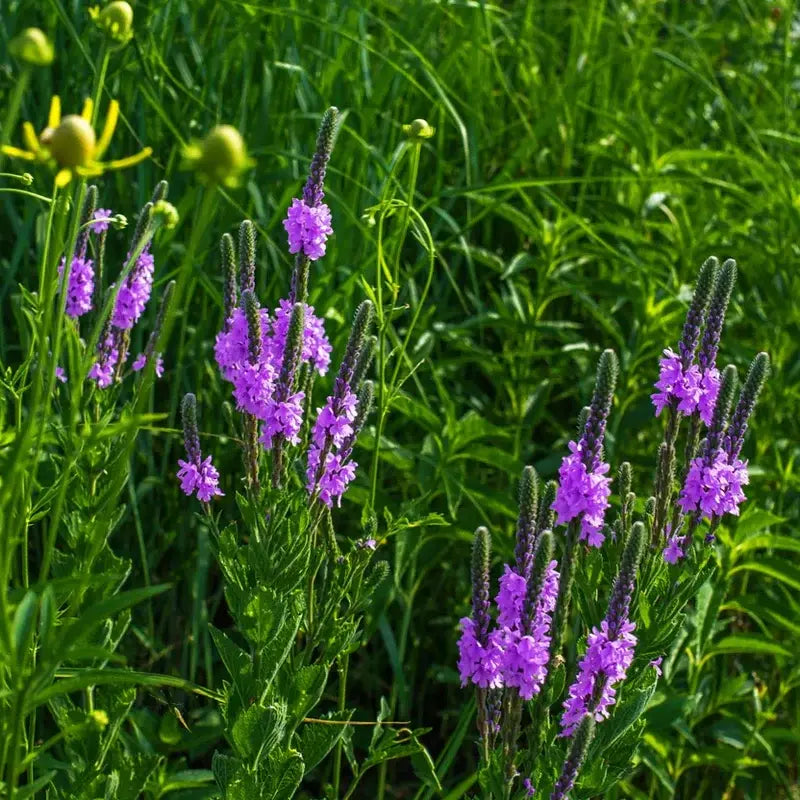
You grow Blue Vervain when you want tall, slim flower spikes that add soft blue-violet color to your garden. It produces upright stems with small, candle-like blooms that appear in summer and give a natural wildflower look. This plant grows well in meadow beds, wild gardens, and moist areas like pond edges. It also attracts bees, butterflies, and other helpful insects, bringing more life to your outdoor space. Once established, it returns every year with very little care. For more plant ideas and gardening inspiration, you can visit Evergreen Trees for helpful guides and tips.
What Is Blue Vervain
Blue Vervain is a tall, slim wildflower that grows naturally across North America. It is a perennial plant that comes back every year after winter. You see narrow green leaves and upright stems that hold spike-like clusters of small, blue-violet tubular flowers. This plant is also known for its long history in traditional folk use, but in gardens it is mainly grown for its airy, elegant look. It attracts bees and butterflies, making it a great choice for wildlife-friendly spaces and natural flower beds.

Key Facts and Identification of Blue Vervain
You can easily identify Blue Vervain by its tall growth, narrow leaves, and spike-like flower clusters.
- Botanical Name: Verbena hastata
- Common Name: Blue Vervain, Swamp Vervain, American Vervain, Simpler’s Joy
- Plant Type: Herbaceous perennial
- Height: 2 to 6 feet tall
- Leaves: Lance-shaped, deep green, serrated edges, arranged in pairs on the stem
- Flowers: Small, tubular, blue-violet blooms in candelabra-like spikes
- Bloom Time: July to September
- Light Needs: Full sun to partial shade
- Soil Type: Moist, loamy soil; tolerates clay and wet conditions
- Hardiness: USDA Zones 3 to 8
- Special Feature: Strong pollinator magnet and traditional herbal plant
Why and How Is Blue Vervain Suitable for Your Garden Space
Blue Vervain is a great choice for many garden spaces because it grows well in different conditions and adds a natural, wild look to your yard. You can plant it in sunny borders, rain gardens, wildflower meadows, or near ponds where the soil stays moist. It handles wet soil easily, so it works in areas where many other plants struggle. Its tall, slim stems do not take much space but still give strong vertical beauty when planted in groups. It is also a reliable perennial that comes back every year and pairs well with native plants.
Where Does Blue Vervain Grow Best
Blue Vervain naturally grows in wet, open areas across the United States and Canada. You often find it in wet meadows, prairie edges, riverbanks, marshes, and roadside ditches where the soil stays consistently moist. It prefers full sunlight but can also tolerate light shade in some conditions. You can grow it in your garden by providing open space, rich soil, and regular moisture.
- Native Habitat: Wet meadows, prairies, riverbanks, marshes, and ditches
- Ideal Climate: Warm summers, cool winters, and steady rainfall
- Hardiness Zones: USDA Zones 3 to 8
- Sunlight: At least 6 hours of direct sun for best blooming growth
How Long Do Blue Vervain Flowers Last
Blue Vervain flowers bloom for several weeks during summer. Each small flower lasts only a few days, but new blooms keep opening along the spike, giving a long-lasting display. This means you can enjoy continuous color for almost two months. After flowering, seed heads form and add extra interest into fall. As a hardy perennial, Blue Vervain keeps your garden lively and colorful through summer and early autumn.
How to Grow Blue Vervain Successfully
You can easily grow Blue Vervain at home because it is a strong plant that handles different soil and weather conditions with ease. It performs best when given the right basic care in the beginning.
- Choose Location: Pick a sunny spot with moist soil
- Soil Type: Use rich, loamy soil that holds moisture well
- Planting Time: Plant in early spring or fall when soil is cool
- Watering: Water regularly in the first season to help roots establish
- Mulching: Add a 2-inch layer of mulch to retain moisture
- Temperature: Grows best between 60°F and 80°F
- Spacing: Keep 12 to 18 inches between plants for airflow
- Care Tip: Stake tall stems in windy areas
With these simple steps, Blue Vervain grows strong and produces healthy, tall flower spikes.
How to Plant Blue Vervain Step by Step for Best Growth
You can easily plant Blue Vervain at home by following a few simple steps that help it establish strong roots and healthy growth in your garden.
- Pick a sunny spot with rich, moist soil
- Loosen the soil 8 to 10 inches deep
- Mix in compost or aged leaf mold for nutrients
- Dig a hole twice as wide as the root ball
- Place the plant at the same depth as the pot
- Fill soil and press it down gently
- Water deeply after planting
- Add mulch around the base, avoid the stem
- Keep soil moist for the first few weeks
Following these steps helps Blue Vervain grow strong and establish quickly in your garden.
How to Care for Blue Vervain Plants
Blue Vervain is easy to care for once it becomes established in your garden. You should water it during dry weeks, especially in the first year, to help strong root growth. Mature plants need less water because they develop deep roots over time. You can add a light layer of compost in spring to keep the soil healthy, but heavy fertilizing is not needed. In late fall or early spring, cut the stems back to the ground to encourage fresh growth. Stake tall plants in windy areas to keep them upright.

How to Propagate Blue Vervain
You can easily grow more Blue Vervain plants using simple propagation methods. Each method works well depending on your garden needs and time.
- Seeds: Collect seeds in fall and sow them in moist soil; they need cold stratification to sprout
- Division: Divide mature clumps in spring or fall and replant them in suitable soil
- Stem Cuttings: Take soft cuttings in early summer and root them in moist soil
- Self-Sowing: Allow seeds to drop naturally for new plants to grow around the parent
These methods help Blue Vervain spread naturally and maintain a healthy garden patch.
How to Prevent Root Rot and Fungal Issues in Blue Vervain
You can prevent root rot and fungal problems in Blue Vervain by managing soil, watering, and airflow properly. These issues usually happen when the plant stays too wet or has poor air circulation.
- Plant in well-drained soil that still holds light moisture
- Avoid heavy clay that traps too much water
- Keep proper spacing for good air movement
- Water at the base, not on the leaves
- Remove dead or infected leaves quickly
- Use clean and sterilized garden tools
- Apply a thin layer of mulch instead of thick, wet layers
How Blue Vervain Helps Pollinators
Blue Vervain is a great plant for supporting pollinators in your garden. You see bees, butterflies, and small native insects visiting its flowers throughout the summer. It also attracts hummingbirds that feed on its nectar-rich spikes. In late summer, it provides an important food source when many other plants stop blooming. In fall and winter, songbirds feed on its seeds, making it a valuable plant for wildlife all year round.
What Is the Seasonal Care Calendar for Blue Vervain
You can care for Blue Vervain easily throughout the year with a simple seasonal routine that supports healthy growth and wildlife value.
- Spring: Cut back old stems, add compost, and water young plants well
- Summer: Water during dry weeks and enjoy the blooming flower spikes
- Fall: Leave seed heads for birds and allow natural reseeding
- Winter: Keep dry stems standing for winter interest and wildlife shelter
This simple care schedule helps Blue Vervain stay healthy and return strong every year.
Who Should Grow Blue Vervain
You should grow Blue Vervain if you want a tall, low-maintenance plant that adds soft summer color to your garden. It is perfect for native plant lovers, rain gardens, and wet soil areas where other plants struggle. It also attracts bees and butterflies, making your garden more lively and natural.
Is Blue Vervain Toxic or Safe
Blue Vervain is generally safe to grow in gardens and is often used in traditional herbal remedies. Its leaves and flowers have been used in teas and folk medicine, but it should not be consumed in large amounts as it may cause stomach upset. Pregnant women should avoid using it, and medical advice is recommended before use. It is mostly safe around pets, but it is still better to prevent them from eating it.
Conclusion
Blue Vervain is a beautiful and useful plant that fits well in many garden styles. It gives you tall stems, soft blue flowers, and attracts bees and butterflies throughout the summer. As a hardy native plant, it handles wet soil, full sun, and even low maintenance with ease. With simple care, it grows stronger each year and forms a healthy garden patch. If you want more easy-to-grow native plants for your yard, you can visit Evergreen Trees and explore more helpful garden ideas for a pollinator-friendly space.
FAQs
1. What is Blue Vervain?
Blue Vervain is a tall native perennial with slim stems and small blue-violet flowers. It is also called Swamp Verbena and grows wild across North America.
2. When does Blue Vervain bloom?
Blue Vervain blooms from July to September, with flowers opening slowly from the base of the spike to the top.
3. Where does Blue Vervain grow best?
It grows best in full sun and moist soil. You will see it thrive in meadows, near ponds, in rain gardens, and along ditches.
4. How do you care for Blue Vervain?
Water often in the first year, add compost in spring, and cut back old stems in fall. The plant needs little care once it settles.
5. Is Blue Vervain safe?
Blue Vervain is safe to grow and is used as a traditional herb. But it should not be eaten in large amounts, and pregnant women should avoid it.
