
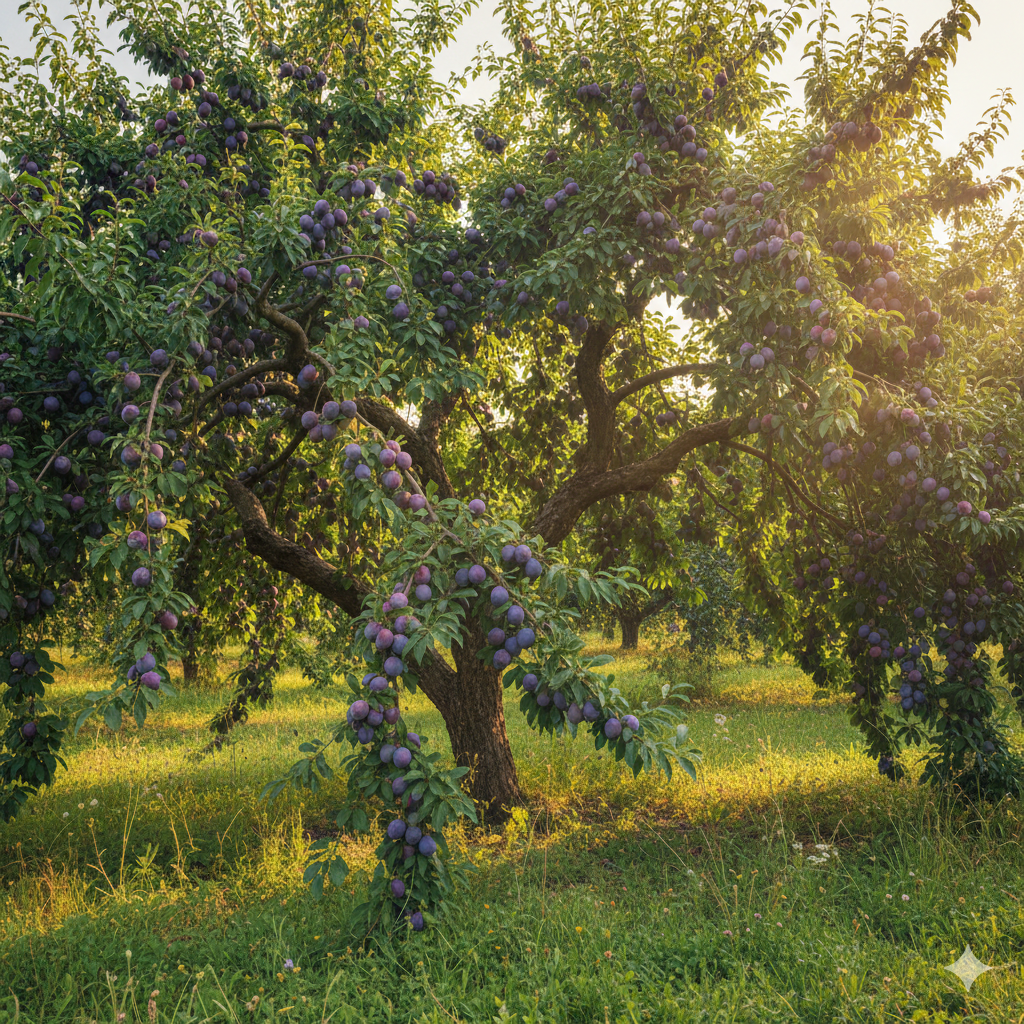
A plum tree is a fantastic choice for home gardens because it gives both beautiful flowers and delicious fruit.In spring, these trees bloom with soft white or light pink flowers that make the garden look fresh and lively. As summer comes, the flowers turn into juicy plums that can be enjoyed fresh or used in cooking.
Plum trees are easy to grow and work well in many garden sizes. With the right care and planting spot, a plum tree can stay healthy and productive for many years. If you are planning to grow a fruit tree in your garden, plum trees are a reliable and rewarding option.
Understanding Plum Trees
A plum tree is a fruit-bearing tree that produces smooth-skinned fruit with a single stone inside. Plums come in different colors and flavors, depending on the variety, but most are sweet with a mild taste.

Common types include:
-
Cherry plum tree - small, tart-sweet fruit, perfect for preserves
-
Purple plum tree - dark, rich, and flavorful fruit
These trees grow best in regions with clear seasons. They need winter cold for flowering and warm weather for fruit growth. Along with fruit, plum trees also add natural beauty to outdoor spaces.
Why Grow Plum Trees at Home?
Many gardeners choose plum trees because they are productive and easy to manage.
Main benefits include:
-
Fresh fruit every year
-
Beautiful spring flowers
-
Natural shade in summer
-
Suitable size for home gardens
-
Long-lasting value
Plum trees are also a good choice for beginners because they do not need complicated care routines.
Best Place to Plant Plum Trees
Plum trees grow best when planted in sunny locations where they receive full sun for most of the day. Sunlight helps improve fruit size and overall flavor. Choose a planting spot with good air movement and well-drained soil to keep the tree healthy. It is also important to protect the tree from strong winds. Avoid low areas where cold air collects, as late frost can damage plum flowers and reduce fruit production.

Preparing the Soil for Healthy Growth
Healthy soil helps plum trees grow strong roots and produce better fruit. Loose, well-drained soil works best.
Before planting:
-
Mix compost into the soil
-
Break hard or compacted areas
-
Improve drainage if needed
-
Clear weeds and debris
Good soil preparation reduces future problems and supports steady growth.
How to Plant a Plum Tree Properly
Planting correctly gives your plum tree a strong start.
Simple steps:
-
Dig a hole wider than the roots
-
Place the tree at ground level
-
Spread roots gently
-
Fill the hole with soil
-
Press lightly to remove air gaps
-
Water deeply
-
Cover the soil with dry leaves or straw to keep moisture in
These steps help roots settle quickly and grow well.
Caring for Plum Trees Made Easy
Once established, plum trees need basic care to stay healthy.
Watering
Young trees need regular watering, especially in dry weather. Mature trees need deep watering during flowering and fruit growth.
Branch Care
Removing weak or crowded branches once a year improves air flow and sunlight. This is similar to apple tree care practices used in home gardens.
Feeding
Use a balanced fertilizer in early spring. Avoid overfeeding, as it can reduce fruit production.
Flowering and Fruit Growth
Plum trees bloom in early spring. Their flowers attract bees, which help with pollination. After pollination, fruit begins to form and slowly grows as temperatures rise.
Good sunlight and regular watering improve fruit quality and sweetness.
Harvesting Plums at the Right Time
Plums are ready to pick in summer, depending on the variety and weather. Ripe plums have full color and come off the branch easily.
Harvest tips:
-
Pick gently by hand
-
Harvest in dry weather
-
Handle carefully to avoid damage
-
Eat fresh or store for short periods
Plums are great for fresh eating, baking, and preserving.
Common Plum Tree Problems and Simple Fixes
Plum trees are strong but may face a few issues:
-
Insects on leaves or fruit
-
Frost damage to flowers
-
Poor drainage
-
Overcrowded branches
Regular checks and simple care help prevent most problems. Learning from apricot tree care methods can also help manage similar issues.
How Plum Trees Benefit Your Garden
Plum trees support the garden in many ways:
-
Provide food for pollinators
-
Add shade and cooling
-
Improve garden appearance
-
Increase plant diversity
They also create a healthier and more balanced garden environment.
Long-Term Benefits of Growing Plum Trees
Growing plum trees offers long-term rewards for home gardeners. They provide fresh fruit every year and add seasonal beauty from spring flowers to summer harvests. Once established, plum trees need little care and continue to grow strong for many years. With proper attention, a plum tree can stay healthy, productive, and enjoyable for decades.

Final Thoughts on Plum Trees
Plum trees are an excellent choice for gardeners who want beauty, shade, and fresh fruit in one plant. From spring flowers to summer harvests, they add charm and value to any garden.
If you want healthy and well-grown plum trees for your home, you can explore quality options at Evergreen Trees, where trees are carefully grown for long-term success in home gardens.
FAQs
When do plum trees start producing fruit?
Most plum trees begin fruiting in 2–3 years.
Do plum trees need full sun?
Yes, full sun helps with healthy growth and better fruit.
Are plum trees easy to care for?
Yes, they need basic watering and yearly branch care.
Can plum trees grow in small gardens?
Yes, with proper spacing and pruning.
Do plum trees attract pollinators?
Yes, their flowers attract bees and helpful insects.
