
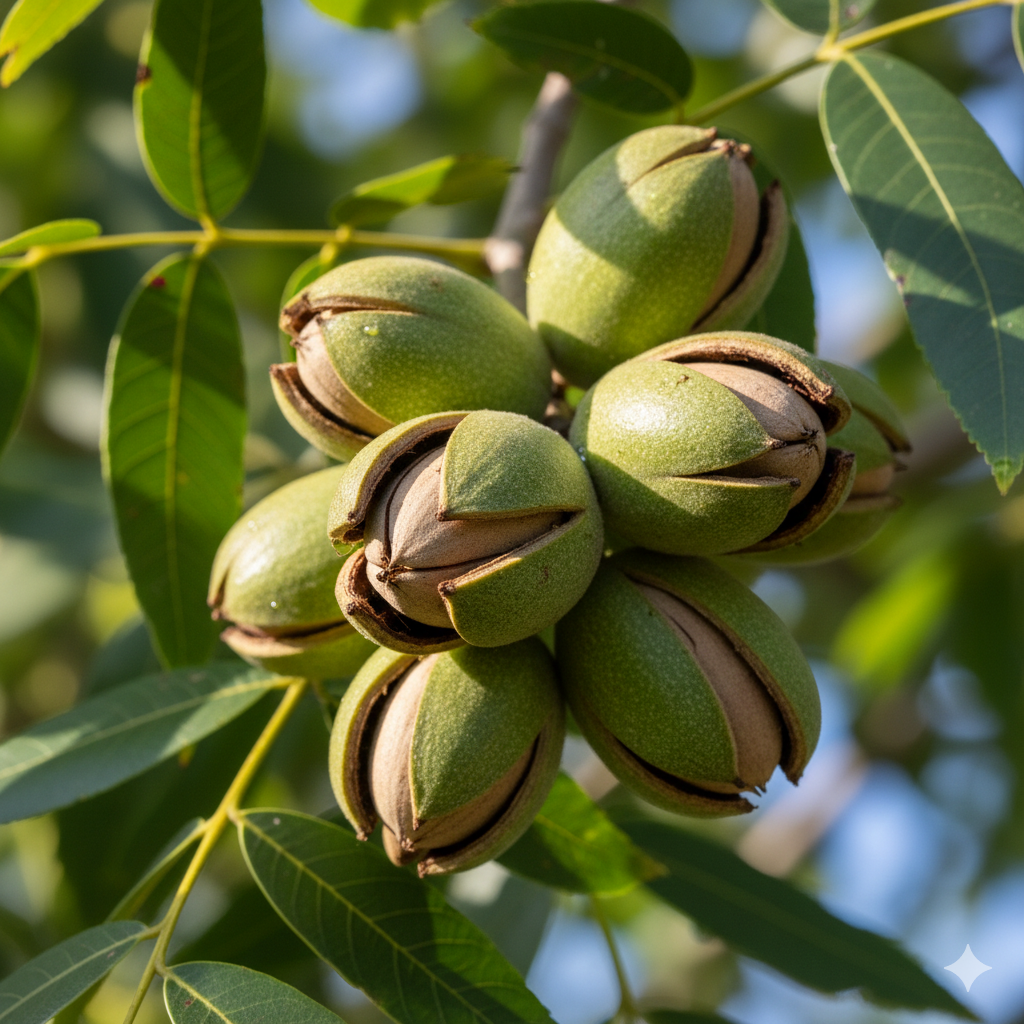
A pecan tree is a long-term investment that brings generous shade, natural beauty, and delicious nut harvests to spacious gardens and open landscapes. Known for its tall growth and wide canopy, a pecan nut tree is often planted as a legacy tree that continues to provide value for generations. In spring and summer, its lush green leaves enhance outdoor spaces, while autumn delivers mature pecans ready for harvest. With proper planting and care, a pecan tree offers strength, productivity, and timeless appeal.
Whether planted on a farm, large backyard, or open lawn, a pecan nut tree combines usefulness with lasting landscape beauty.
What Is a Pecan Tree and How Does It Grow?
A pecan tree is a deciduous nut-producing tree that sheds its leaves in winter and produces pecans in autumn. This pecan nut tree thrives in warm climates with long growing seasons and plenty of space for roots and branches to spread.
In spring, new leaves and flowers appear, followed by nut development throughout summer. Although a pecan tree grows slowly in its early years, it becomes stronger and more productive with age. With consistent care during establishment, a single pecan nut tree can remain productive for decades.

Why Should You Choose a Pecan Nut Tree for Your Landscape?
A pecan nut tree is an excellent choice for gardeners who want shade, structure, and edible rewards in one tree. Its broad canopy provides cooling shade during hot months, making outdoor areas more comfortable.
Pecan trees also support birds and beneficial insects, improving the overall garden ecosystem. They work especially well in orchards, farms, and large properties where space is not limited.
If you are looking for a healthy pecan tree for planting, Evergreen Trees offers quality trees grown carefully for strong root development and long-term success.
What Are Pecan Tree Nut Buds and Why Do They Matter?
Nut buds on a pecan tree form on healthy branches during the growing season. These buds determine future nut production and are a key sign of overall tree health.
Stress caused by drought, poor soil, or overcrowding can reduce bud formation. Supporting your pecan nut tree with proper watering, nutrients, and spacing helps ensure steady nut production year after year.
When Do Pecan Trees Flower and Produce Nuts?
A pecan tree flowers in spring, producing male and female flowers separately on the same tree. Successful pollination is essential for nut development and improves when more than one pecan nut tree is planted nearby.
After pollination, nuts develop throughout summer and mature in early to mid-autumn. Good sunlight and airflow improve nut size and quality.
How Much Is a Pecan Tree?
Many gardeners ask about the cost of a pecan tree before planting. Prices vary depending on several factors, including:
-
Tree size and age
-
Grafted versus seed-grown pecan nut trees
-
Container-grown or bare-root trees
-
Nut-producing varieties
Although a pecan tree may cost more initially than smaller fruit trees, it offers long-term value through decades of nut harvests and shade.
Where Can You Plant a Pecan Nut Tree?
A pecan nut tree needs plenty of room to grow properly. It performs best in open spaces where its roots and canopy can expand freely.
Ideal planting locations include:
-
Large backyards
-
Farms and orchards
-
Open lawns away from buildings
-
Property edges with enough clearance
Choosing a reliable nursery ensures your pecan tree is suited to your soil and climate conditions.

How Do You Plant a Pecan Tree Successfully?
Correct planting is essential for establishing a strong pecan tree. Choose a sunny location with good air circulation and well-drained soil. Avoid low areas where water collects, as standing moisture can damage roots.
How Should Soil Be Prepared for a Healthy Pecan Nut Tree?
Healthy soil supports deep root growth and long-term stability for a pecan nut tree. Before planting:
-
Loosen compacted soil
-
Add organic compost
-
Improve drainage if necessary
-
Clear weeds and debris
Good soil preparation helps your pecan tree establish quickly and support future nut production.
What Are the Basic Steps to Plant a Pecan Tree?
-
Dig a hole wider than the root system
-
Place the pecan tree at natural soil level
-
Spread roots gently
-
Backfill with prepared soil
-
Water deeply
-
Mulch to retain moisture
These steps reduce transplant stress and encourage steady early growth.
How Do You Care for a Pecan Tree Throughout the Year?
Young pecan trees need regular care, but maintenance becomes easier as they mature.
Watering:
Water consistently during the first few years. Mature pecan nut trees mainly need water during extended dry periods.
Pruning:
Minimal pruning is required. Remove damaged or overcrowded branches to improve airflow.
Fertilizing:
Apply a light fertilizer in early spring to support leaf growth and nut development.
When Is the Right Time to Harvest Pecans?
Pecans are ready for harvest in autumn when the shells split open and nuts fall naturally. Collecting nuts regularly helps maintain quality and reduces pest problems.
Fresh pecans from a pecan nut tree can be eaten raw, roasted, baked, or stored for later use.

What Common Problems Can Affect a Pecan Tree?
Some common challenges include:
-
Slow growth due to poor soil
-
Reduced nut production from limited sunlight
-
Root stress caused by standing water
Most issues can be avoided with proper site selection and basic care.
What Long-Term Benefits Does a Pecan Nut Tree Offer?
A mature pecan nut tree provides:
-
Annual nut harvests
-
Cooling shade
-
Wildlife habitat
-
Increased property value
-
A long-lasting landscape feature
With patience, a pecan tree becomes one of the most rewarding trees you can grow.
Conclusion
A pecan tree is an excellent choice for gardeners with space who want long-term beauty and edible rewards. With proper planting and early care, a pecan nut tree grows into a strong, productive tree that benefits both people and nature for generations. If you’re planning to add a quality pecan tree to your landscape, exploring trusted options from Evergreen Trees is a great place to begin your long-term planting journey.
FAQs
How long does it take for a pecan tree to produce nuts?
Most pecan trees begin producing nuts after several years.
Do pecan nut trees need full sun?
Yes, full sunlight is essential for healthy growth and nut production.
Are pecan trees hard to maintain?
Once established, pecan trees are relatively low maintenance.
Do pecan trees need more than one tree for pollination?
Yes, planting multiple pecan nut trees improves pollination and yield.
How long do pecan trees live?
With proper care, pecan trees can live and produce nuts for many decades.
