
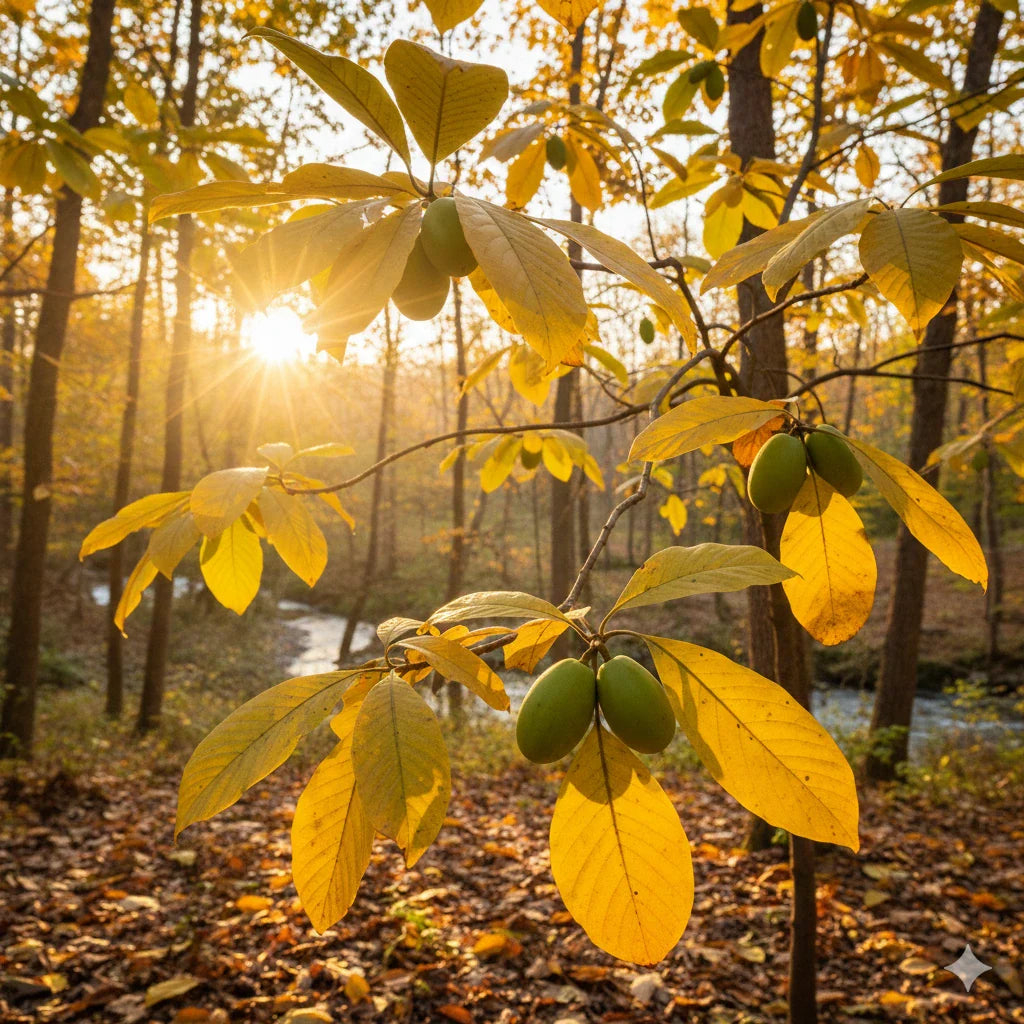
The paw paw tree is an excellent choice for gardeners seeking something unique. This small tree that loses its leaves produces creamy, richly flavored fruits that are sweet, nutritious, and unlike typical temperate fruits. Its large, vibrant green leaves create a lush, tropical appearance in any garden, providing shade and adding to its ornamental appeal.
More than just looks, the paw paw tree attracts pollinators like bees and butterflies, supporting your backyard ecosystem. In this guide, we’ll cover planting, care, harvesting, propagation, and the many benefits of this remarkable fruit tree.
What is a Paw Paw Tree?
The paw paw tree (Asimina triloba) is native to North America. Its sweet, unusual fruits set it apart from other temperate fruit trees. The tree has broad green leaves that make it visually striking, even before it bears fruit.
Not only is it attractive, but it also supports pollinators, making it a great addition to sustainable gardens. The tree is popular with gardeners because it gives tasty fruit and looks beautiful in the yard.

Why Grow a Paw Paw Tree?
Growing pawpaw tree offers several benefits for gardeners who want beauty, flavor, and easy care in one plant.
-
Unique Fruit Flavor: Soft, delicious, and fruity fruit
-
Attractive Foliage: Large leaves provide lush greenery.
-
Pollinator Friendly: Attracts bees and butterflies.
-
Low Maintenance: Grows well in soil that drains easily and needs little care.
If you want both fresh fruit and a beautiful garden, you can explore fruit tree collection from Evergreen Trees.
How to Plant a Paw Paw Tree
Step 1: Select the Right Location
Young trees prefer partial shade, though mature trees tolerate full sun. Choose fertile, well-drained soil to prevent root issues. Avoid low-lying, waterlogged areas.
Step 2: Spacing
Plant at least 10-15 feet apart if you want cross-pollination. Planting with enough space makes the tree healthier and fruitier.
Step 3: Planting Depth
Plant roots slightly below soil level. Avoid deep planting to prevent water retention and root rot.
Step 4: Watering
Keep soil consistently moist during the first year. Consistent watering encourages strong root development and healthy fruiting.
Best Climate for Growing Pawpaw Trees
Pawpaw trees grow best in areas with mild winters and warm summers. They do well in USDA zones 5 to 9. These trees like soil that stays slightly moist and does not dry out completely.
Young pawpaw trees need some protection from strong sunlight and frost. Light shade and regular watering help them grow strong in the first few years. Once established, pawpaw trees become hardy and are easy to maintain in the right climate.
How to Care a Paw Paw Tree
Proper care ensures healthy growth and abundant fruit:
-
Fertilization: Apply organic compost or balanced fertilizer each spring.
-
Pruning: Remove dead or weak branches to improve sunlight exposure and airflow.
-
Pollination: Plant at least two trees of different varieties to ensure fruit set.
-
Pest Management: Monitor for minor pests and leaf spots; healthy trees rarely have serious issues.
Trees from Evergreen trees.com are grown with strong root systems, making long-term care even easier.
Paw Paw Tree Leaves and Pictures
The large leaves of this fruit tree give it a tropical look. Here’s how they appear in a garden setting

Picture of paw paw tree showing full foliage and structure.

Close-up of paw paw tree leaves, highlighting broad green leaves.
These leaves not only beautify the garden but also provide shade for understory plants.
When Pawpaw Fruit Is Ready
Pawpaw fruit ripens from late summer to early fall. It starts green and slowly turns yellowish-brown as it matures. When fully ripe, the fruit feels soft, smells sweet, and has a smooth, custard-like texture inside.
Best Time to Pick and Use Pawpaw Fruit
Pawpaw fruit is ready to pick when it softens slightly and releases a pleasant fragrance. Handle the fruit gently to avoid damaging it. It tastes best when enjoyed fresh, but also works well in desserts and simple recipes. Once established, healthy pawpaw trees produce generous harvests each season.
Propagation of Paw Paw Trees
You can propagate through seeds or grafting:
-
Seeds: Stratify seeds (cold treatment) before spring planting. Seed-grown trees may take 2-3 years to fruit.
-
Grafting: Produces faster fruiting trees and ensures consistent fruit quality.
Grafting is ideal if you want reliable, high-quality fruit sooner.
Benefits of Growing a Paw Paw Tree
-
Fresh, Homegrown Fruit: Enjoy organic, nutritious fruits from your garden.
-
Attractive: Large, tropical-looking leaves enhance any landscape.
-
Wildlife Friendly: Supports bees, butterflies, and beneficial insects.
-
Nutritional Value: High in vitamins, minerals, and antioxidants.
This tree enriches both your garden’s appearance and your diet.
Tips for Healthy Pawpaw Trees
While this tree is easy to grow, a few common care issues may appear over time.
-
Pollination: At least two trees are needed for good fruit production.
-
Cold Sensitivity: Protect young trees during unexpected frost.
-
Fruit Drop: Ensure consistent watering and shelter from strong winds.

With proper care, these minor issues are easily manageable.
Conclusion
The paw paw tree is a unique, productive, and visually appealing addition to any backyard. Its sweet, tropical-flavored fruits, large green leaves, and easy-care nature make it ideal for both beginners and experienced gardeners. By choosing healthy, nursery-grown trees from Evergreen trees.com, you can enjoy fresh, homegrown fruits while enhancing the beauty of your garden with its lush foliage and ornamental appeal.
FAQs
1. How long does it take for a paw paw tree to produce fruit?
Most paw paw trees begin producing fruit within 2-3 years when grafted, while seed-grown trees may take 4-6 years to bear fruit.
2. Do you need more than one paw paw tree to get fruit?
Yes, planting at least two genetically different paw paw trees is recommended for proper cross-pollination and reliable fruit production.
3. What climate is best for growing paw paw trees?
Paw paw trees thrive in USDA zones 5-9, preferring moderate temperatures, consistent moisture, and protection from extreme heat or frost when young.
4. How do you know when paw paw fruit is ripe?
Ripe paw paw fruit becomes slightly soft, develops a sweet aroma, and changes color from green to yellowish-brown, usually in late summer or early fall.
5. Are pawpaw trees hard to maintain?
No, pawpaw trees are low-maintenance once established. They require regular watering during early growth, light pruning, and minimal pest control.
