
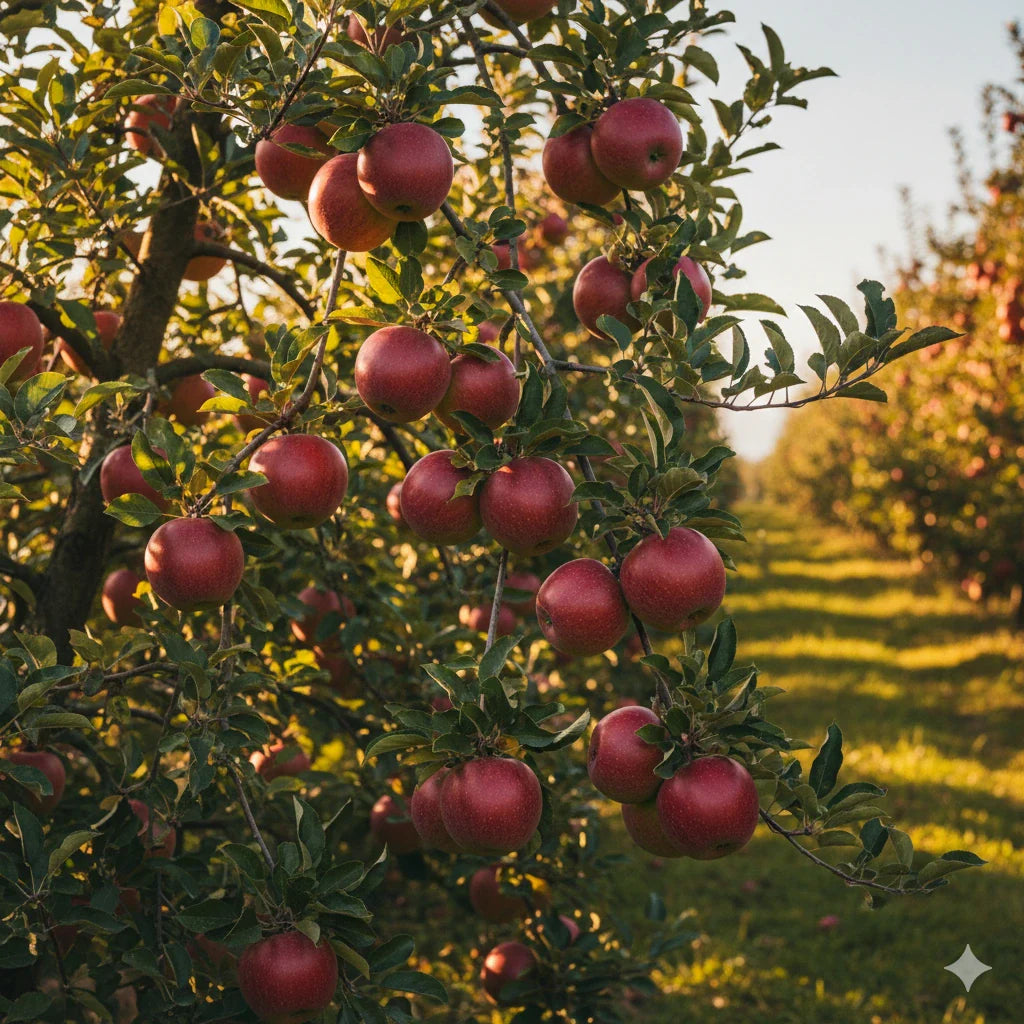
An apple tree adds beauty and fresh fruit to any garden. In spring, it blooms with soft white or pink flowers, and in autumn, it rewards you with crisp, tasty apples. Whether grown in a backyard orchard or as part of an edible landscape, apple trees bring charm, shade, and long-lasting value to outdoor spaces. Apple trees also attract bees and other helpful insects, which support nearby plants and make your garden healthier. With good care, a single apple tree can produce fruit for many years and become a favorite part of your home.
What Is an Apple Tree and How Does It Grow?
An apple tree is a fruit tree that loses its leaves in winter and grows apples in late summer or fall. It grows best in areas with clear seasons and cool winters. Apple trees are popular because they are easy to manage and produce fruit for many years.
In spring, flowers appear before the leaves fully grow. These flowers later turn into apples. With basic care, one apple tree can give fruit for decades.

Why Should You Choose an Apple Tree for Your Garden?
Apple trees are loved for both their beauty and fruit. Their spring flowers make gardens look fresh and colorful, while their green leaves add shade in summer.
They produce apples that can be eaten fresh or used for cooking and baking. Apple trees also attract bees, helping other plants grow better. They fit well in orchards, garden borders, or as a single feature tree.
If you are looking for a healthy apple tree for your garden, you can find quality options at Evergreen Trees, where trees are grown with care and shipped ready for planting.
When Do Apple Tree Flowers Bloom and Why Are They Important?
Apple tree flowers bloom in spring. These flowers are important because they must be pollinated to produce fruit. Healthy flowers lead to better apples and higher yields.
Bees and other insects help with pollination, making apple trees great for pollinator‑friendly gardens.
How Much Is an Apple Tree?
The cost of an apple tree depends on its size and type. Prices can vary based on age, variety, and how the tree is grown.
Factors that affect price include:
-
Young bare-root trees usually cost less
-
Grafted or potted trees cost more
-
Special or disease-resistant varieties may cost extra
Buying from a trusted source like Evergreen Trees helps ensure you get a healthy tree that grows well and produces fruit for years.
Where Can You Use an Apple Tree in Your Garden Design?
An apple tree works well in many spaces around the home. An apple tree yard planting looks great on a lawn, near a fence, or along a garden edge. It can also be part of a small backyard orchard or planted on its own for light shade and seasonal interest.
Apple trees are easy to shape and harvest, making them a good fit for yards of various sizes.

How Do You Plant an Apple Tree Successfully?
Planting an apple tree the right way helps it grow healthy and strong. Choose a sunny place where the tree gets fresh air. Good airflow helps prevent disease.
The soil should drain well and not stay wet. Do not plant in low areas where cold air settles. Before planting, loosen the soil and add compost. After planting, water the tree well and add mulch to keep moisture in.
How Should Soil Be Prepared for an Apple Tree?
Healthy soil helps apple tree roots grow strong. Mix compost, improve drainage, and avoid hard or compact soil.
Before planting:
-
Mix compost into the soil
-
Improve drainage if needed
-
Avoid hard or compacted soil
What Are the Basic Steps to Plant an Apple Tree?
-
Dig a wide hole
-
Place the tree at ground level
-
Fill the hole with soil
-
Water well after planting
-
Add mulch to keep moisture in
How Do You Care for an Apple Tree Throughout the Year?
Good apple tree care is simple and steady. Trim lightly each year, water during dry weather, and feed in early spring to keep the tree healthy and productive.
Trim apple trees annually to remove weak or crowded branches. This helps sunlight reach the fruit and keeps the tree healthy.
Water during dry weather, especially when fruit is growing. Feed with a balanced fertilizer in early spring.
When Is the Right Time to Pick Apples?
-
Apples are ready when they have full color and feel slightly soft.
-
A ripe apple comes off the branch easily when you twist it.
-
Picking time changes with the type of apple and the weather.
-
If you wait too long, apples can become too soft or fall down.
What Common Problems Can Affect Apple Trees?
Apple trees may face pests, diseases, or frost damage. Proper spacing, trimming, and regular checks help prevent most problems.

What Are the Long‑Term Benefits of Growing an Apple Tree?
Apple trees provide fresh fruit, seasonal beauty, shade, and support for pollinators. They also add value to your garden and make it more attractive. With good care, apple trees stay productive for many years and can give fruit for decades. This makes them a great long-term choice for home gardens.
Conclusion
An apple tree is a great choice for any garden, big or small. It adds beauty with its spring flowers and gives fresh, healthy fruit in the growing season. Apple trees also bring shade and attract helpful pollinators like bees. With the right planting spot and simple, regular care, they grow strong and stay productive for many years. Growing an apple tree is a rewarding way to enjoy home-grown fruit and a more beautiful garden.
FAQs
How long does an apple tree take to produce fruit?
Most apple trees start producing fruit in 3-5 years.
Do apple trees need another tree for pollination?
Many apple trees grow better with another variety nearby.
Are apple trees easy to care for?
Yes, with basic watering and trimming, they are easy to maintain.
Do apple trees attract pollinators?
Yes, their flowers attract bees and helpful insects.
