
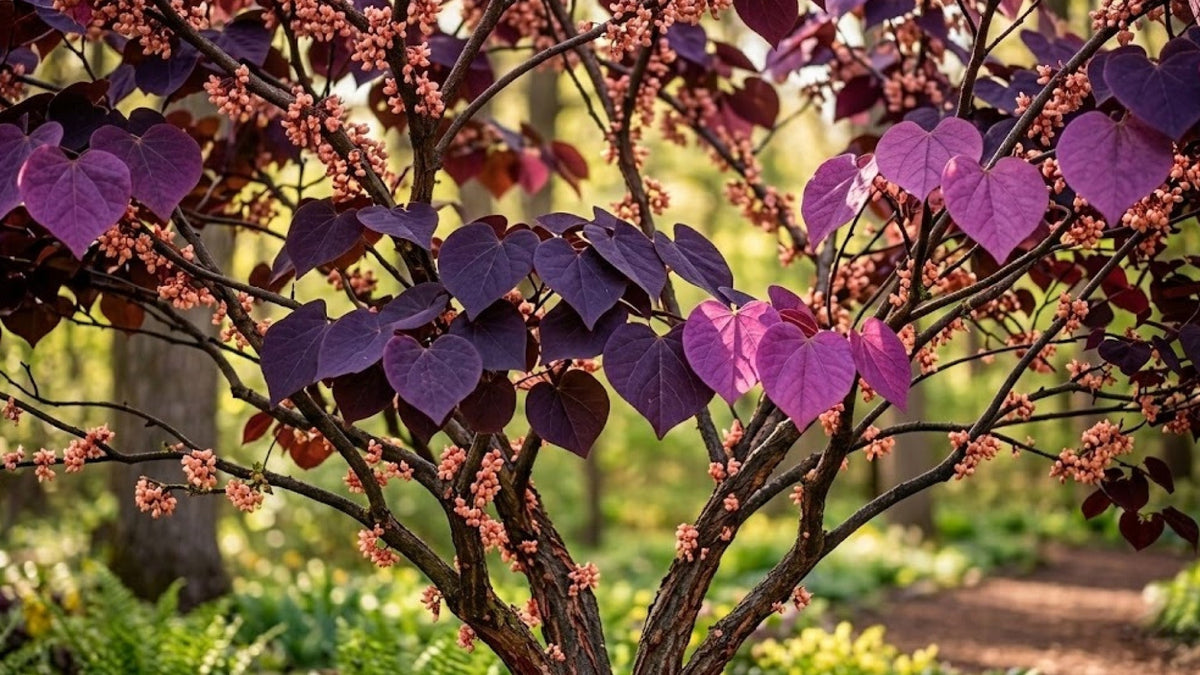
The Forest Pansy Redbud Tree is one of the most eye-catching ornamental trees you can plant in your garden. Known for its rich purple leaves and bright spring flowers, this tree adds bold color and elegance to any landscape. It is a cultivar of the Eastern Redbud, scientifically known as Cercis canadensis, and it stands out because of its dramatic foliage.
If you are looking for a tree that offers beauty from spring through fall while remaining easy to care for, the Forest Pansy Redbud is an excellent choice.
A Burst of Color in Early Spring
One of the most beautiful features of the Forest Pansy Redbud is its early spring bloom. Before the leaves fully appear, small pink to purple flowers cover the bare branches. These blossoms grow directly along the branches and even the trunk, creating a stunning display.
The flowers signal the arrival of spring and bring life back into the garden after winter. They also attract bees and butterflies, making your outdoor space more vibrant and full of movement.

Rich Purple Foliage That Changes with the Seasons
After the spring flowers fade, the real drama begins. The heart-shaped leaves of the Forest Pansy Redbud emerge in deep reddish-purple tones. This bold leaf color makes the tree stand out against green lawns and other plants.
As summer progresses, the leaves may darken to burgundy or develop green undertones. In fall, they often turn shades of yellow, orange, or even bronze, adding another layer of seasonal beauty.
Because of this color transformation, the tree offers visual interest for most of the year.
Size and Growth Habit
Forest Pansy Redbud trees are considered small to medium ornamental trees. They are perfect for residential landscapes because they do not grow too large.
Typical Size
-
Height: 20 to 30 feet
-
Spread: 25 to 35 feet
The tree has a rounded, spreading canopy that creates light shade. Its graceful branching structure gives it a soft and elegant appearance.
Because of its manageable size, it works well in small yards, front gardens, and even near patios.
Ideal Growing Conditions
The Forest Pansy Redbud is relatively easy to grow when planted in the right location.
Sunlight
It grows best in full sun to partial shade. In cooler climates, full sun helps bring out the richest purple leaf color. In warmer areas, some afternoon shade can protect the leaves from scorching.
Soil
This tree prefers well-drained soil. It can adapt to different soil types, but it does not like heavy, waterlogged ground. Adding organic matter to the soil can improve drainage and support healthy root growth.
Watering
Newly planted trees should be watered regularly until they establish strong roots. Once mature, they are moderately drought-tolerant but still benefit from occasional deep watering during dry periods.
Pruning
Light pruning in late winter helps maintain the tree’s shape and removes any dead or weak branches. Avoid heavy pruning, as it can reduce flowering and affect the tree’s natural structure.
Landscaping Ideas for Forest Pansy Redbud
This tree is often used as a focal point because of its bold color and elegant form.
As a Feature Tree
Planting a single Forest Pansy Redbud in the center of a lawn creates a dramatic statement. The purple foliage contrasts beautifully with green grass. For even more impact, you can pair it with other flowering trees in your garden to create layers of seasonal color and interest.
In Mixed Garden Beds
Pair it with shrubs that have light green or silver foliage for a striking contrast. The purple leaves add depth and interest to layered landscapes.
Near Walkways or Entrances
Placing the tree near an entrance or pathway enhances curb appeal. Its spring blooms create a welcoming and cheerful atmosphere.
In Small Yards
Because it remains compact, it is an excellent choice for urban gardens where space is limited.

Benefits of Planting a Forest Pansy Redbud
There are many reasons gardeners love this tree:
-
Stunning purple foliage
-
Early spring blooms
-
Compact size for small spaces
-
Attracts pollinators
-
Easy to maintain
-
Multi-season beauty
It provides color when many other trees are still bare and continues to stand out long after spring has passed.

Wildlife and Environmental Value
Forest Pansy Redbud trees support local wildlife. The early flowers provide nectar for bees and butterflies. Later in the season, small seed pods may develop, which can attract birds. Because it is a cultivated variety of the native Eastern Redbud, often referred to as the eastern redbud forest pansy, it adapts well to many landscapes and blends beautifully into natural and eco-friendly garden designs.
Common Considerations
While generally hardy, Forest Pansy Redbud trees may experience minor issues such as leaf scorch in extreme heat or stress in poorly drained soil. Choosing the right planting location and ensuring proper drainage can prevent most problems.
Regular watering during dry spells and light annual maintenance will keep the tree healthy and vibrant.
Why Choose Forest Pansy Redbud?
If you want a tree that makes a bold statement without overwhelming your garden, the Forest Pansy Redbud is an ideal option. Its deep purple leaves, bright spring blossoms, and manageable size make it perfect for modern landscapes.
Unlike larger shade trees, it provides visual impact without requiring too much space. Whether planted alone or combined with other ornamental plants, it adds elegance and personality to any yard.
Conclusion
The Forest Pansy Redbud Tree is a versatile and stunning addition to any garden. Its early spring pink blossoms, deep purple heart-shaped leaves, and brilliant fall colors provide interest and beauty in every season. Compact yet elegant, it works well in small yards, urban landscapes, and as a focal point in larger gardens. With proper planting, sunlight, and light maintenance, the Forest Pansy Redbud thrives easily, rewarding gardeners with years of multi-seasonal charm.
While the Forest Pansy Redbud provides seasonal color, pairing it with evergreen trees can ensure your garden stays beautiful and vibrant all year round.
FAQs
1. How tall does a Forest Pansy Redbud Tree grow?
Forest Pansy Redbuds typically grow 20 to 30 feet tall with a spread of 25 to 35 feet, making them ideal for small to medium gardens.
2. When does the Forest Pansy Redbud bloom?
This tree blooms in early spring, usually before the leaves appear, producing clusters of pink to purple flowers along its branches and trunk.
3. What kind of sunlight does it need?
It grows best in full sun to partial shade. Full sun helps maintain rich purple foliage, while partial shade can protect the leaves from heat stress in warmer climates.
4. Is the Forest Pansy Redbud tree low maintenance?
Yes. It requires minimal care once established, including occasional watering, light pruning in winter, and well-drained soil for best growth.
5. Does it attract wildlife?
Yes. The spring flowers attract bees and butterflies, and small seed pods later in the season may attract birds, making it wildlife-friendly as well as ornamental.
