
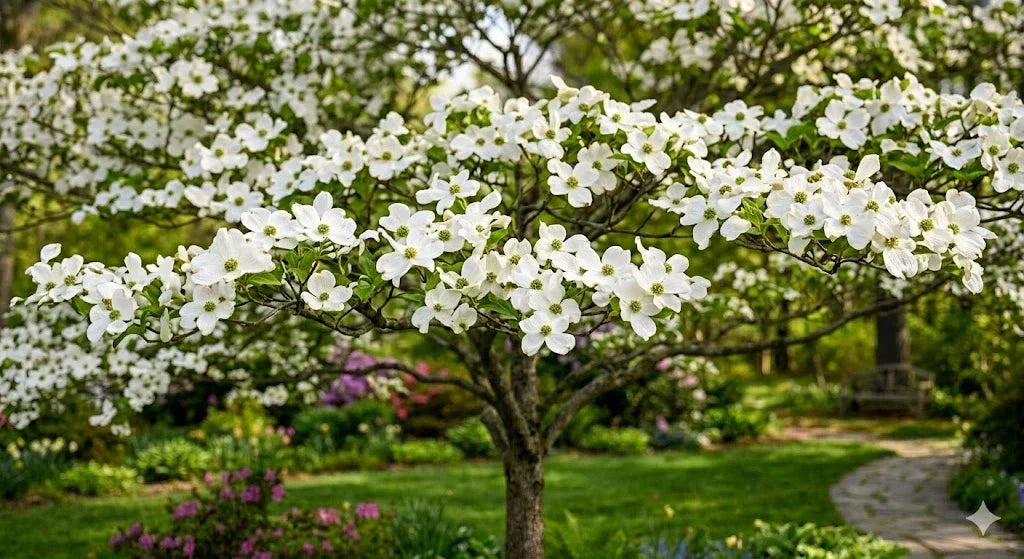
The Flowering Dogwood Tree is one of the most admired trees for gardens and landscapes. Its beauty extends beyond spring blooms, offering interest in every season. With delicate flowers, vibrant fall foliage, and striking winter structure, this tree adds charm year-round. Small to medium in size, it works well in both cozy yards and larger landscapes. Native to the eastern United States, the Dogwood also attracts birds, butterflies, and other pollinators, making it a favorite for gardeners who love both beauty and wildlife.
Why Flowering Dogwood Is a Favorite for Gardens
The Flowering Dogwood is loved for its seasonal beauty and versatility, making it a standout in any garden.
Stunning Spring Blooms
The most famous feature of the Dogwood is its spring flowers. Typically white or pink, these blooms appear before the leaves emerge, creating a striking display. A white flowering dogwood tree creates a crisp, elegant look in traditional landscapes, while a pink flowering dogwood tree adds a soft romantic touch to garden spaces.
These clustered, four-petaled blooms look delicate and refined, making the tree a natural focal point. Beyond their beauty, they also provide nectar for bees and butterflies, supporting pollinators in your garden.
Summer Foliage That Lasts
After the flowering season, the Dogwood continues to impress with its lush green leaves. The dense foliage offers shade and provides a beautiful backdrop for other plants. During summer, the tree keeps your garden looking full and vibrant, even after the flowers have faded.
Vibrant Fall Colors
In fall, the Dogwood’s leaves turn brilliant shades of red, orange, and purple, adding warmth and color to your garden. This seasonal change enhances the beauty of your landscape and pairs well with other autumnal plants. Small red berries may also appear, attracting birds and adding another layer of natural charm.
Winter Bark and Branch Structure
Even in winter, the Dogwood remains visually appealing. Its gray-brown, textured bark and unique branching pattern create architectural interest in the garden. Snow or frost on the bare branches can make the tree look picturesque, providing beauty even without flowers or leaves.

Choosing the Right Size and Variety
Flowering Dogwoods are small to medium-sized trees, making them versatile for different garden spaces.
Typical Height and Spread
Most Dogwoods grow between 15 and 30 feet tall, with a similar spread. This manageable size allows them to fit into small yards, suburban gardens, or larger landscaped areas.
Popular Dogwood Varieties
Several varieties offer unique colors and traits:
-
‘Cherokee Chief’ – Pink flowers and deep red fall leaves
-
‘Appalachian Spring’ – White flowers, compact size, disease-resistant
-
‘Cloud 9’ – Large white flowers and strong disease resistance
Choosing the right variety ensures the tree complements your garden style and climate.
How to Plant and Care for Flowering Dogwood
Flowering Dogwoods are relatively easy to grow with the right care.
Sunlight Requirements
They prefer partial shade to full sun, with morning sun and some afternoon shade. Too much direct sunlight in hot climates may stress the tree, while too much shade can reduce flowering.
Soil and Watering Tips
Dogwoods thrive in well-drained, slightly acidic soil. Adding compost improves growth and root health. Newly planted trees should be watered regularly, while mature trees can tolerate short dry periods but perform best with consistent moisture.
Mulching for Healthy Growth
Apply mulch around the base to retain soil moisture, reduce weeds, and protect roots. Keep mulch a few inches from the trunk to avoid rot.
Pruning Guidelines
Prune in late winter or early spring to remove dead or crossing branches and improve airflow. Light pruning maintains shape, but avoid heavy cuts as they can reduce flowering.
Landscaping Ideas for Your Garden
The Flowering Dogwood is versatile and enhances many garden designs.
As a Specimen Tree
Planting a single Dogwood in a prominent spot creates a focal point, while layering it with shrubs, perennials, and ground covers adds depth and interest. As part of our Flowering Tree Collection, Dogwoods work beautifully alongside other seasonal bloomers to create vibrant, multi-seasonal garden displays.
In Mixed Borders
Pair with shrubs, perennials, and ground covers to create layered garden beds with year-round interest.
Near Walkways or Entrances
Planting near walkways or entrances makes your yard more welcoming and elegant, especially during spring bloom.
Woodland Garden Uses
Dogwoods thrive in partial shade, making them perfect for woodland or natural-style gardens where they blend with other trees and shade-loving plants.

Benefits of Flowering Dogwood
Flowering Dogwoods offer numerous advantages:
-
Multi-season beauty: spring blooms, summer foliage, fall colors, and winter structure
-
Wildlife-friendly: flowers attract pollinators, berries feed birds
-
Low-maintenance: easy to care for once established
-
Perfect size: suitable for small and medium gardens
-
Long lifespan: can thrive for decades with proper care
This combination of beauty and practicality makes the Dogwood a top choice for gardeners.
Conclusion
The Flowering Dogwood Tree is a stunning, versatile, and low-maintenance addition to any garden. With delicate spring blooms, lush summer foliage, vibrant fall colors, and attractive winter bark, it offers year-round beauty and interest. Perfect as a focal point, in mixed borders, or in woodland-style gardens, it also supports wildlife like birds and pollinators. With proper care, this tree can thrive for decades, providing long-lasting charm.
Planting a Flowering Dogwood is not just adding a tree-it’s bringing seasonal elegance to your garden. Enhance your garden’s beauty throughout the year by pairing it with carefully selected Evergreen Trees.
FAQs
1. How fast does a Flowering Dogwood grow?
It grows about 1-2 feet per year under good conditions.
2. When does it bloom?
It blooms in early to mid-spring before the leaves fully appear.
3. Does it need full sun?
It prefers morning sun and partial afternoon shade.
4. Does it attract wildlife?
Yes, it attracts bees, butterflies, and birds.
5. Is it low maintenance?
Yes, once established, it requires minimal care.
