
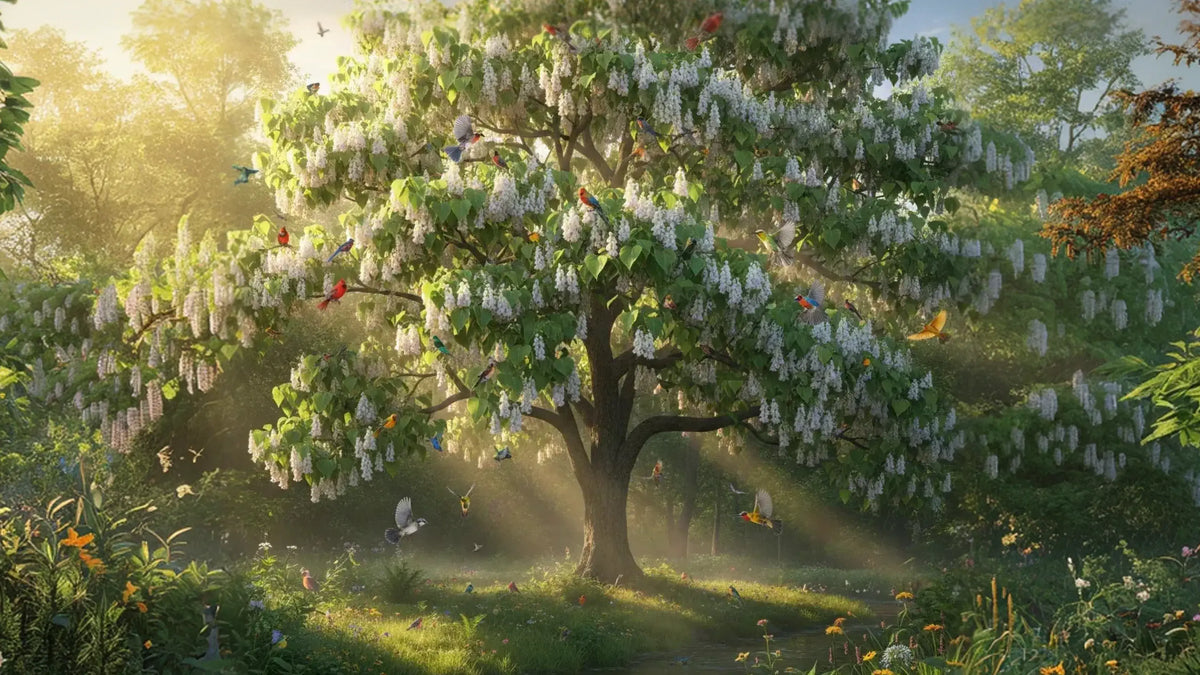
The Catalpa Tree is a fast-growing and eye-catching tree that quickly becomes the highlight of any garden. With its large heart-shaped leaves, showy white flowers, and broad canopy, it provides shade, beauty, and character to outdoor spaces. This tree is perfect for gardeners who want a quick-growing, ornamental tree that stands out and adds charm to any landscape. With proper care, a Catalpa Tree can become a long-lasting and valuable feature in your garden for many years.
Make your garden even more beautiful by pairing your Catalpa Tree with trees from evergreen flowering trees collection.
What Makes the Catalpa Tree Unique?
The catalpa tree stands out because of its dramatic appearance and seasonal charm. It works beautifully as a shade tree but also serves as a decorative focal point in large yards.
Here’s what makes it special:
-
Large, heart-shaped green leaves
-
Showy white flowers with yellow and purple markings
-
Long, bean-like seed pods
-
Fast growth rate
-
Strong adaptability to different soil types
Because of these qualities, many homeowners plant catalpa tree for both shade and seasonal interest.
When Do Catalpa Tree Blooms Appear?
One of the most exciting features of this tree is its beautiful catalpa tree blooms. In late spring to early summer, the tree becomes covered in clusters of trumpet-shaped white flowers. These blooms often have soft purple and yellow markings inside, making them even more attractive.
The flowers are lightly fragrant and attract bees, butterflies, and other helpful pollinators. The blooming period usually lasts several weeks, turning the tree into a stunning floral display.
After the flowers fade, long green seed pods begin to form. These pods hang from the branches through summer and sometimes remain into winter, adding unique visual interest.

How Large Does the Northern Catalpa Tree Grow?
The northern catalpa tree can grow quite large, especially when planted in open areas with plenty of sunlight.
Typical mature size:
-
Height: 40–60 feet
-
Spread: 20–40 feet
Its wide canopy provides excellent shade, making it perfect for large yards, farms, parks, or open landscapes. Because of its size, it should be planted where it has enough room to grow freely.
What Growing Conditions Does a Catalpa Tree Need?
The catalpa tree is known for being easy to grow and adaptable.
Sunlight
It prefers full sun for the best flowering results. At least 6 hours of direct sunlight daily helps the tree produce stronger growth and better blooms.
Soil
It grows well in many soil types, including clay and sandy soil. However, well-drained soil is important to prevent root problems.
Water
Young trees need regular watering during their first growing season. Once established, the tree can tolerate short dry periods.
Because of its adaptability, many gardeners choose it as a low-maintenance shade tree.
Does the Catalpa Tree Require Pruning?
Yes, pruning helps keep the tree healthy and well-shaped. Since the catalpa tree grows quickly, light pruning once a year is recommended.
Best time to prune: Late winter or early spring before new growth begins.
Benefits of pruning include:
-
Removing weak or damaged branches
-
Improving airflow
-
Encouraging stronger growth
-
Maintaining a neat and balanced shape
Regular pruning supports better flowering and long-term strength.
How Fast Does a Catalpa Tree Grow?
The catalpa tree is considered a fast-growing tree. Under good conditions, it can grow 1 to 2 feet per year. Because of this rapid growth, it quickly provides shade and structure in the landscape.
This makes it a great option for homeowners who want fast results without waiting many years for a tree to mature.

Is the Catalpa Tree Good for Wildlife?
Yes, it is very beneficial for wildlife. The flowers attract bees and butterflies, helping support pollinators. Birds often use the tree for nesting and shelter. Its broad canopy also provides shade for animals during hot weather.
Planting a catalpa tree can help create a more eco-friendly and lively garden environment.
Why Should You Plant a Northern Catalpa Tree?
The northern catalpa tree is especially popular because of its cold hardiness. It performs well in cooler climates and can handle seasonal weather changes better than many ornamental trees.
If you want a tree that offers:
-
Quick shade
-
Beautiful seasonal flowers
-
Strong adaptability
-
Wildlife benefits
Then the catalpa tree is an excellent long-term investment for your landscape.
Its bold leaves, dramatic blooms, and unique seed pods make it stand out in any yard.

Conclusion
The Catalpa Tree is a wonderful choice for anyone who wants fast growth, generous shade, and eye-catching seasonal beauty. With its large heart-shaped leaves and striking presence, it easily becomes the highlight of any garden or yard. Its hardiness and impressive size make it suitable for many regions, while being easy to grow and low-maintenance. Over the years, this tree rewards gardeners with shade, charm, and natural beauty.
To explore more high-quality trees and landscaping ideas, visit Evergreen Trees.
FAQs
1. How fast does a catalpa tree grow?
It grows quickly, often adding 1–2 feet per year in good growing conditions.
2. When do catalpa tree blooms appear?
Catalpa tree blooms usually appear in late spring to early summer and can last several weeks.
3. Is the northern catalpa tree good for cold climates?
Yes, the northern catalpa tree is hardy and performs well in cooler regions.
4. Does the catalpa tree need a lot of care?
No, it is considered low-maintenance once established, requiring only basic watering and annual pruning.
5. How long can a catalpa tree live?
With proper care, a catalpa tree can live for many decades and continue providing shade and seasonal beauty.
