
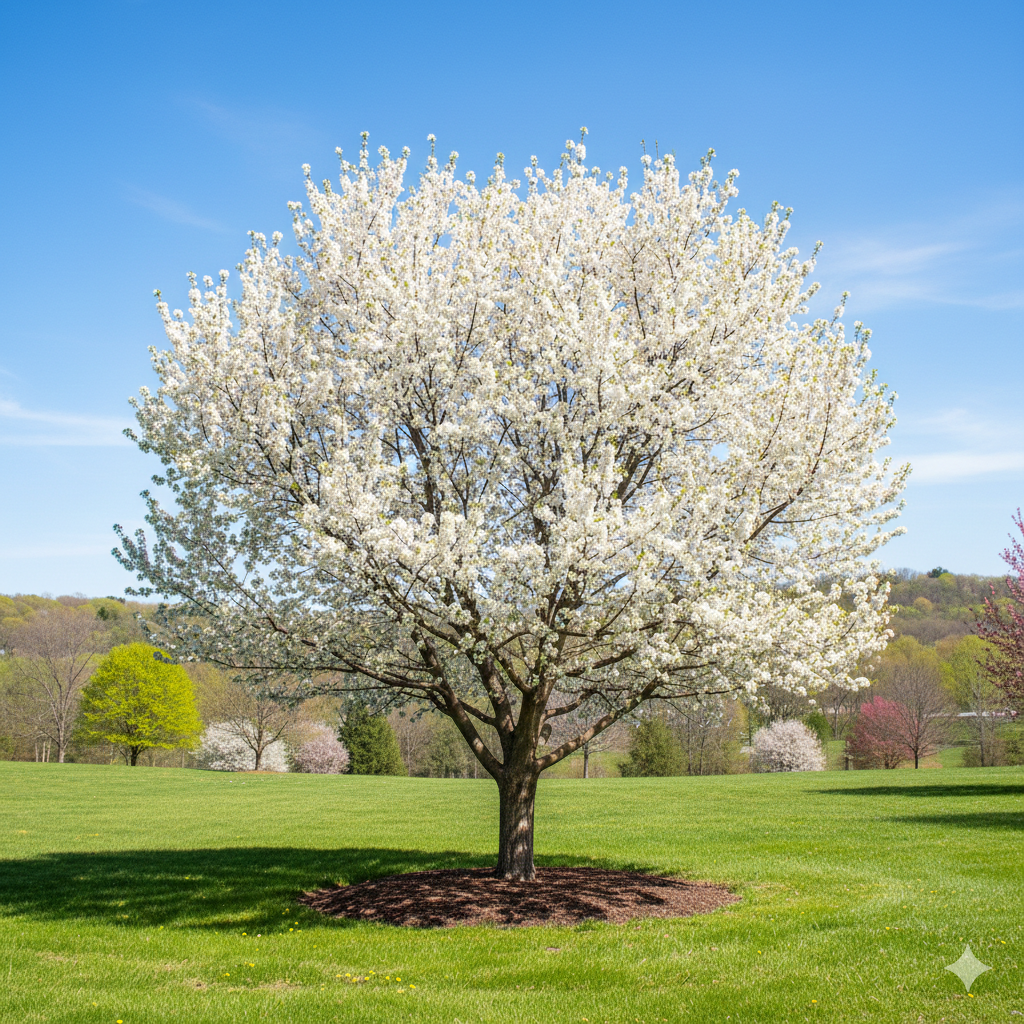
The American Plum Tree is a charming native tree that fills your garden with life, color, and sweetness. In early spring, its branches burst into soft white blossoms, creating a bright and cheerful display that instantly refreshes the landscape. As the seasons change, those delicate flowers turn into small, flavorful plums that ripen in summer. Beyond its beauty, this tree also welcomes birds and pollinators, making your garden feel lively and natural.
If you want a flowering tree that offers beauty, fruit, and wildlife value all in one, the American Plum Tree is an excellent choice.
What Is an American Plum Tree?
The American Plum Tree is a medium-sized tree that grows naturally in many parts of North America. It usually grows about 15 to 25 feet tall and forms a rounded shape with spreading branches.
In early spring, before many trees start growing leaves, this tree becomes covered in small white flowers. These flowers make your garden look bright and fresh after winter.
Because it is a native tree, it grows well in many soil types and weather conditions.
Why Is the American Plum Tree So Popular?
Gardeners love this tree for many reasons. It is not only pretty but also practical.
Here’s why people choose it:
-
Beautiful white flowers in spring
-
Small edible plums in late summer
-
Easy to grow
-
Strong and hardy
-
Good for wildlife
It is perfect for anyone who wants a flowering tree that also produces fruit.

When Does the American Plum Trees Bloom?
The American Plum Tree blooms in early to mid-spring. The flowers appear before or at the same time as the leaves.
The branches become full of white blossoms, creating a soft and cheerful look. The flowers also have a light fragrance and attract bees and other pollinators.
This early bloom makes it one of the first trees to bring color back into your garden after winter.

Does American Plum Tree Produce Fruit?
Yes, the American Plum Tree produces small round plums in late summer.
The fruit can be:
-
Red
-
Yellow
-
Purple
The plums may taste slightly tart when fresh, but they are perfect for making jam, jelly, and preserves. Many people also enjoy them fresh once fully ripe.
Birds and small animals love the fruit too, so this tree helps support local wildlife.
Where Should You Plant an American Plum Tree?
This tree grows best in full sunlight. More sun means better flowers and more fruit.
For best results, choose a location that has:
-
Full sun (at least 6 hours daily)
-
Well-drained soil
-
Good air circulation
-
Space for the tree to spread
It can handle different soil types and even cold winters, which makes it a reliable choice for many gardens.
Many gardeners also appreciate the connection to wild American plum trees, which grow naturally in forests and open fields, adding a sense of native charm to cultivated landscapes.

How Do You Plant an American Plum Tree?
Planting is simple if you follow these steps:
-
Dig a hole twice as wide as the root ball.
-
Place the tree so the top of the roots is level with the ground.
-
Fill the hole with soil and press gently.
-
Water deeply after planting.
-
Add mulch around the base (but not touching the trunk).
Water regularly during the first year to help the roots grow strong.
How Much Care Does It Need?
The American Plum Tree is fairly easy to maintain.
Watering
Water young trees regularly. Once established, they can handle short dry periods.
Pruning
Light pruning in late winter or early spring helps keep the tree healthy. Remove broken or crowded branches.
Feeding
In most cases, heavy fertilizer is not needed. Adding compost in spring is usually enough.
Overall, this tree does not require complicated care.
How Does It Help Wildlife?
One of the best things about the American Plum Tree is how it supports nature.
-
Bees visit the flowers in spring.
-
Birds eat the fruit in summer.
-
The branches provide shelter for small animals.
Because it is a native tree, it fits naturally into the environment and helps your garden stay balanced and healthy.
How Does the Tree Look in Each Season?
The American Plum Tree changes beautifully through the year:
Spring: White flowers cover the branches.
Summer: Green leaves and colorful fruit appear.
Fall: Leaves turn yellow or orange.
Winter: The branch shape adds texture to the garden.
This seasonal beauty makes it a special addition to any flowering tree collection.
Is It Good for Small Gardens?
Yes, it can work well in medium-sized gardens. However, it may send up small shoots from the base over time. These can be trimmed if you want to control its spread.
In larger gardens, this natural spreading habit can create a beautiful, natural-looking grove.
What Are the Long-Term Benefits?
Planting an American Plum Tree gives you many long-term rewards:
-
Spring flowers every year
-
Fresh fruit in summer
-
Support for birds and bees
-
Low maintenance once established
-
Natural beauty for decades
It is a tree that keeps giving year after year.
Conclusion
The American Plum Tree is a lovely flowering tree that adds beauty, color, and fruit to your garden. In early spring, it blooms with soft white flowers, and in summer, it produces small, tasty plums. This tree also helps wildlife by attracting bees and feeding birds. It is easy to grow and works well in many gardens.
If you want to bring charm and life to your outdoor space, explore more quality trees at Evergreen Trees and find the perfect tree for your garden.
FAQs
What is an American Plum Tree?
A medium-sized native tree with white spring flowers and small edible plums in summer, attracting birds and pollinators.
When does it bloom and produce fruit?
It blooms in early to mid-spring and produces red, yellow, or purple plums in late summer.
How do I plant and care for it?
Plant in full sun with well-drained soil. Water regularly when young, prune lightly in late winter or early spring, and add compost if needed.
Can it grow in small gardens?
Yes, it works well in medium-sized gardens. Trim small shoots from the base to control spreading.
How does it benefit wildlife?
Its flowers attract bees, its fruit feeds birds, and its branches provide shelter for small animals, supporting a balanced garden ecosystem.
